
The best channel strips for home studios combine preamp gain, tone shaping, and dynamics control in one practical recording tool. They can simplify your signal path while helping vocals, instruments, and voiceovers sound more polished before conversion.
This roundup focuses on genuine audio channel strips, separating them from similarly named LED lighting channels and accessories. Use the guide below to match features, workflow, and budget to your recording setup.
Best 10 Channel Strips for Home Studios Picks for 2026
Digital Tube Control
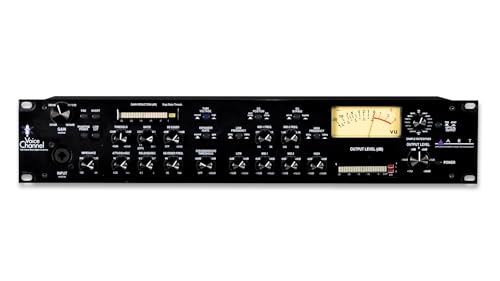
- Tube preamp for warmth and definition
- Compressor, expander, de-esser, and gate
- USB plus multiple digital outputs
Best For: Home studios needing one flexible tube-processed input
Ambient Studio Accent

- Covered design for softer accent lighting
- 50 segments and 64 scene modes
- App, Wi-Fi, Bluetooth, and voice control
Best For: Customizable indoor lighting for a home studio
Classic Tube Front End

- Class A 12AX7 tube preamp
- VCA compressor with flexible timing
- Three-band EQ with parametric mids
Best For: Rack-based vocal and instrument recording
Studio Mood Lighting

- Aluminum profile with acrylic diffuser
- Fits LED strips up to 8 mm wide
- Surface-mount installation without ceiling slots
Best For: Indirect accent lighting in a home-studio room
Premium Vocal Control

- Discrete preamp with Lundahl I/O transformers
- Compressor, Transient Designer, and tube saturation
- Mono format for focused vocal or instrument tracking
Best For: Home studios wanting extensive mono recording and tone-shaping control
Studio Ambience

- 9.8-foot strip with diffuser cover and channel
- 50 customizable segments and 64 scene modes
- App, Wi-Fi, Bluetooth, and voice control
Best For: Decorative home-studio accent lighting
Tube Tracking Flexibility

- Mono tube channel-strip design
- Switchable mic impedance and opto/FET compression
- Four-band semi-parametric EQ
Best For: Home studios shaping vocals and instruments during tracking
Best Overall Channel

- 14.5-foot length for broad installations
- Aluminum construction supports heat dissipation
- Softens glare from strips up to 8mm wide
Best For: Larger home studio accent-lighting projects
Best Smart Lighting Option

- RGBIC colors with 50 customizable segments
- App, Wi-Fi, Bluetooth, and voice control
- Includes a diffuser for softer accent lighting
Best For: Compatible Govee owners adding smart studio accents
Digital Tube Control – ART VoiceChannel
For home studios seeking versatile channel strips for home studios, the ART VoiceChannel combines a tube preamp with flexible dynamics processing and digital connectivity. Its single-channel design supports microphones, instruments, and other recording sources, while USB and multiple digital outputs can simplify integration with a computer or interface.
Best For: Home-studio recording setups that need tube character, comprehensive vocal control, and digital output options.
Pros:
- Tube preamp is designed for warmth and definition.
- Includes compressor, expander, de-esser, and gate controls.
- Offers USB, ADAT, AES/EBU, S/PDIF, and TOSLink connectivity.
- Supports sample rates up to 192 kHz and major desktop operating systems.
Cons:
- Provides one channel, so it is not intended for multichannel tracking by itself.
- Its 5.5 kg weight may make portability less convenient.
The VoiceChannel is a strong choice when one input needs both analog-style tube tone and detailed dynamics management. The range of digital connections is especially useful for a studio that may expand its routing options over time.
Ambient Studio Accent – Govee RGBIC Strip Lights
The Govee RGBIC system is not an audio channel strip, but it can add practical ambient lighting to a home studio. Its covered design aims for softer, more uniform illumination, while app, Wi-Fi, Bluetooth, and voice controls make it easy to adjust the room’s visual atmosphere during recording or editing.
Best For: Home-studio owners who want customizable accent lighting around ceilings, cabinets, skirting lines, or other smooth indoor surfaces.
Pros:
- Diffuser covers and 60 LEDs per meter are designed to reduce visible hotspots.
- RGBIC technology provides 50 customizable segments and 64 scene modes.
- Supports app, Wi-Fi, Bluetooth, Alexa, Google Assistant, and Matter pairing after an app update.
- Cuttable strips allow length customization when installed according to the instructions.
Cons:
- It is lighting equipment rather than an audio channel strip.
- Designed for indoor use and is not water resistant.
- Adhesive installation requires a clean, dry, smooth surface and firm pressing.
For a studio roundup, this product belongs in the room-setup category rather than the signal-chain category. It can still be useful for creating comfortable, controllable background lighting around a recording or production space.
Classic Tube Front End – PreSonus StudioChannel
The PreSonus StudioChannel is a traditional one-rack-unit option for recording setups comparing channel strips for home studios. It combines a high-voltage Class A 12AX7 tube preamplifier with a VCA compressor and three-band EQ, giving you a focused hardware path for shaping microphones, instruments, keyboards, and synths.
Best For: Project and professional studios wanting an all-in-one tube preamp, compressor, and EQ for individual sources.
Pros:
- Class A 12AX7 tube preamplifier offers gain and tube-drive controls.
- VCA compressor includes auto attack/release and soft/hard knee options.
- Three-band EQ features a parametric mid band and shelving/peak low and high bands.
- Provides mic, line, and instrument inputs in a rugged 1U rackmount chassis.
Cons:
- Its analog rackmount format may require additional interface or routing equipment.
- The supplied notes do not list digital or USB connectivity.
The StudioChannel suits engineers who prefer a straightforward hardware signal path with tube gain, compression, and EQ in one chassis. Its flexible input and tone-shaping options make it adaptable across vocals and several instrument sources.
Studio Mood Lighting – Corner Linear LED Channel
This corner-mounted aluminum LED channel is not one of the channel strips for home studios used in audio recording, but it can help organize indirect lighting in a studio room. The surface-mounted profile hides and protects compatible LED strips, creating a cleaner lighting installation for walls, ceilings, home theaters, or art spaces.
Best For: Home-studio lighting projects that need a surface-mounted diffuser channel for LED strips up to 8 mm wide.
Pros:
- Aluminum construction helps dissipate heat and protect strips from dust and impacts.
- Acrylic cover is intended to create softer, more even indirect lighting.
- Surface mounting avoids cutting slots or installing a suspended ceiling.
- The 3.1-meter profile can be connected side by side and cut for installation needs.
Cons:
- LED strips are not included.
- It is a lighting accessory, not an audio channel strip or recording processor.
- No manufacturer warranty is listed in the supplied details.
This channel is best considered a studio-environment accessory rather than recording hardware. It is a practical choice when the goal is to add concealed, diffused lighting while protecting a separately purchased LED strip.
Premium Vocal Control – SPL Channel One MK3
For home studios seeking versatile channel strips for home studios, the SPL Channel One MK3 combines a discrete preamp with Lundahl input/output transformers and several recording-focused processing stages. Its mono design suits individual vocal, instrument, or voiceover tracking.
Best For: Home-studio users who want a comprehensive mono channel strip with preamp, compression, transient shaping, and tube saturation.
Pros:
- Discrete preamp with Lundahl I/O transformers
- Includes a compressor and Transient Designer
- Tube saturation adds another tonal option
- Stainless-steel construction
Cons:
- Mono operation limits it to one channel at a time
- At 16.78 pounds, it is relatively substantial for a home-studio rack
The Channel One MK3 is a feature-rich choice when you want multiple stages of tone shaping in one mono unit. Its size and weight make it worth planning for permanent or semi-permanent placement.
Studio Ambience – Govee RGBIC LED Strip Lights
Although not an audio processor, these Govee lights can add customizable ambience around a home-studio workspace. The 9.8-foot RGBIC strip includes a diffuser cover and channel, while app, Wi-Fi, Bluetooth, and voice controls make scene changes straightforward.
Best For: Home-studio owners looking for decorative accent lighting around ceilings, cabinets, skirting lines, or studio furniture.
Pros:
- Diffuser cover and 60 LEDs per meter provide softer, more uniform lighting
- RGBIC technology offers 50 customizable segments and 64 scene modes
- Supports app, Wi-Fi, Bluetooth, Alexa, Google Assistant, and Matter control
- Cuttable and connectable up to 13.12 feet
Cons:
- Indoor use only and not water resistant
- Requires a smooth, clean, dry surface for reliable adhesion
- It is lighting rather than an audio channel strip
For creators comparing channel strips for home studios, this is best treated as a studio-environment accessory rather than recording hardware. Its diffuser and flexible controls make it useful for shaping the room’s visual atmosphere.
Tube Tracking Flexibility – ART Pro Channel III
The ART Pro Channel III is a mono tube channel strip aimed at recording setups that need flexible front-end control. Switchable microphone impedance, selectable opto/FET compression voicings, and a four-band semi-parametric EQ give home studios several ways to shape a source while tracking.
Best For: Home-studio engineers who want tube-based mono processing with adaptable compression and EQ options.
Pros:
- Tube channel-strip design
- Switchable microphone impedance
- Selectable opto and FET compression voicings
- Four-band semi-parametric EQ
Cons:
- Mono operation is intended for single-source tracking
- Its 21.9-inch width requires suitable rack or desk space
The Pro Channel III stands out among channel strips for home studios when compression character and input matching are priorities. Its combination of tube circuitry, dual compression voicings, and semi-parametric EQ supports detailed source-specific setup.
Best Overall Channel – Long LED Diffuser Channel
For home studios that need flexible ambient lighting, this 14.5-foot LED diffuser channel provides a clean way to conceal and soften compatible LED strips. It supports strips up to 8mm wide and can be adapted for ceilings, corners, cabinet edges, and baseboards.
Best For: Home studio users planning longer, customizable accent-lighting runs.
Pros:
- Long 14.5-foot channel for larger installations.
- 1.3mm aluminum construction helps with heat dissipation.
- Diffuser cover spreads light for softer, glare-reduced illumination.
- Can be customized for ceilings, corners, walls, and cabinet edges.
Cons:
- LED strip lights are not included.
- Limited to LED strips up to 8mm wide.
- May require cutting and additional installation planning for custom layouts.
This is a practical choice when you want a substantial channel length and a discreet, architectural lighting effect. Just confirm your strip width and plan for the separate LED strip purchase.
Best for Slat Walls – 6-Pack Black LED Channels
These compact black aluminum channels are designed for decorative wall treatments, making them a strong option for home studios using wood slat or acoustic-style panels. The six 16-inch sections include diffuser covers and mounting hardware for a coordinated recessed installation.
Best For: Studios with wood slat walls, acoustic panels, headboards, or other decorative panel installations.
Pros:
- Six 16-inch channels create a coordinated multi-section layout.
- Black finish blends with several dark and wood-toned wall panel styles.
- Diffuser provides softer, more uniform light and is described as anti-yellowing.
- Includes end caps, metal clips, screws, and adhesive tape.
Cons:
- LED strips are not included.
- Suitable for strips up to 8mm wide.
- Designed for indoor use and is not water resistant.
Choose this kit when the channel needs to integrate with a slat-wall or acoustic-panel design rather than run as one continuous length. Its included hardware simplifies installation, while the short sections offer layout flexibility.
Best Smart Lighting Option – Govee RGBIC Extension
For home studios where color effects and smart control matter, this Govee 3.28-foot extension combines RGBIC lighting with a diffuser channel. It is an extension for compatible Govee H61B3 or H61B5 basic kits, rather than a standalone plug-in lighting system.
Best For: Users who already own a compatible Govee kit and want short, controllable studio accent-lighting extensions.
Pros:
- RGBIC technology supports 50 customizable segments and 64 scene modes.
- App control includes brightness, timers, scenes, and color temperature adjustments.
- Works with Wi-Fi, Bluetooth, Alexa, and Google Assistant after pairing.
- 60 LEDs per meter and the included cover provide softer, more uniform light.
Cons:
- Requires a compatible Govee H61B3 or H61B5 basic kit.
- Extension is only 3.28 feet and does not include a plug.
- Indoor use only and not water resistant.
This is the most feature-rich pick for colorful, app-controlled studio ambiance, but compatibility is essential. It makes the most sense as an expansion for an existing Govee setup rather than as a first lighting purchase.
How We Picked the Best Channel Strips for Home Studios
We evaluated the audio-focused products for the features that matter in a home recording environment: preamp character, available gain, compressor and equalizer controls, input and output flexibility, metering, phantom power, build quality, and ease of use. Tube models can add harmonic color, while solid-state or hybrid designs may offer cleaner headroom and more predictable results. Digital outputs received extra consideration for studios that want to connect directly to an interface or mixer.
Several listed items are LED strip channels, diffusers, or lighting products rather than recording hardware. They are not substitutes for an audio channel strip, so confirm the product category before buying.
Quick Comparison
| Type | Best for | What to prioritize |
|---|---|---|
| Tube channel strip | Warm vocals and colored tracking | Tube circuit, compression range, noise performance |
| Clean or hybrid strip | Flexible everyday recording | Headroom, EQ control, metering, connectivity |
| Premium mono strip | Detailed vocal and instrument chains | Build quality, processing precision, recallable workflow |
Key Buying Factors for Channel Strips for Home Studios
Preamp Character and Gain
Choose a clean preamp if you want an accurate source sound and plenty of mix flexibility. A tube or transformer-colored design is useful when you want harmonics and a fuller tracking tone. Check the available gain and input impedance if you plan to record quiet dynamic microphones, passive instruments, or low-output sources.
Processing and Signal Order
A useful strip should provide the controls you will actually use: high-pass filtering, an adjustable equalizer, compression, and possibly a de-esser or expander. Look for flexible routing or insert points when you want to place external processors in the chain. Simple layouts are often better for fast home-studio sessions than complex controls you rarely adjust.
Connections and Noise
Verify microphone, line, and instrument inputs, balanced outputs, phantom power, and any digital connectivity. Digital outs can reduce conversion steps, but they may require compatible clocking or interface connections. Low self-noise, clear metering, and reliable gain staging are especially important in untreated rooms and quiet vocal recordings.
Space and Workflow
Confirm whether the unit is desktop-friendly or requires rack space. A channel strip is most useful when it fits between your microphone and interface without creating confusing level mismatches. Leave room for ventilation around tube equipment and keep critical controls easy to reach.
Who Should Buy Which Channel Strips for Home Studios?
- Choose a tube strip if you want noticeable warmth, saturation, and character while tracking vocals or voiceovers.
- Choose a cleaner, flexible strip if you record varied sources and want one unit for vocals, acoustic instruments, keyboards, and bass.
- Choose a premium mono strip if vocal production is central to your studio and you value precise compression, EQ, metering, and durable construction.
- Skip an audio channel strip for now if you mainly need LED lighting, cable concealment, or diffuser channels; those products serve studio décor rather than audio recording.