
The best samplers for recording make it easier to capture sounds, trigger samples, build beats, and shape ideas without interrupting your workflow. This roundup covers compact standalone samplers, performance-focused grooveboxes, and MIDI controllers that pair with computer-based production software.
Whether you need a portable sketchpad, a pad controller for a DAW, or an all-in-one beat-making instrument, these picks cover a range of recording styles, budgets, and experience levels.
Best 10 Samplers for Recording Picks for 2026
Best Standalone Sampler

- Battery-powered standalone operation with built-in mic and speaker
- 16 pads, chopping, resampling, timestretching, and onboard effects
- USB-C, line I/O, MIDI, and microSD support
Best For: DAWless beatmakers and portable recording
Best Computer-Based Pad Controller
PreSonus ATOM MIDI Pad Controller

- 16 velocity- and pressure-sensitive RGB pads
- Includes Studio One Artist and Ableton Live Lite
- Assignable controls for samples, loops, effects, and DAW editing
Best For: Software-based recording and live performance
Best Pocket Sound-Design Sampler

- Built-in mic for quick sample capture
- Chopping, step sampling, resampling, and chromatic playback
- Granular controls plus filters and envelopes for sound shaping
Best For: Portable sampling and experimental sound design
Best Simple Sample Pad

- Eight velocity- and pressure-sensitive backlit pads
- SD/SDHC playback for supported 16-bit mono WAV samples
- USB MIDI and standard MIDI I/O for software or hardware
Best For: Straightforward live sample triggering
Pocket Sampling Pick

- Built-in microphone and 3.5 mm sampling input
- Melodic, drum, sequencing, and effects modes
- Pocket-sized and battery powered
Best For: Portable beat-making and quick sound sketches
Ableton Clip Control Pick

- 64 RGB pads for clips, loops, and samples
- Nine faders for mixer and device control
- USB-powered Ableton Live integration
Best For: Computer-based Ableton Live production and performance
Advanced Portable Sampler
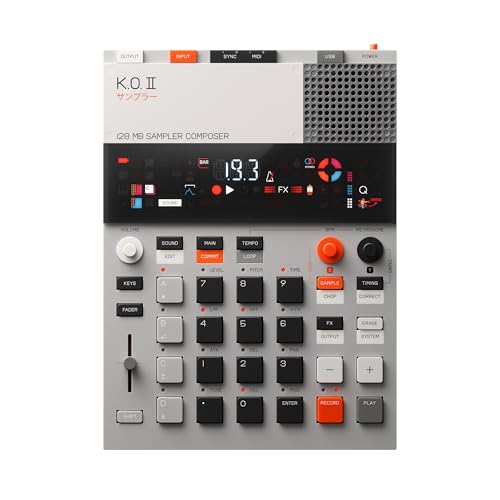
- 128 MB memory and 999 sample slots
- Built-in mic, line input, resampling, and chopping
- Sequencer with effects, MIDI, and sync connectivity
Best For: Portable sampling, arrangement, and live beat performance
Compact Sample Trigger
Akai LPD8 USB MIDI Pad Controller

- 8 RGB-backlit MPC-style pads
- 8 assignable Q-Link knobs
- USB-powered and highly portable
Best For: Laptop producers who want compact sample and loop control
Expanded Pad Control
Donner STARRYPAD MIDI Beat Maker

- 16 pads with three assignable banks
- Faders, knobs, note repeat, and tap tempo
- USB-C plus MIDI in/out connectivity
Best For: Beat makers needing extensive pad and MIDI control
Standalone Keyboard Sampler Setup
Akai MPK Mini Play MK3 MIDI Keyboard

- 25 dynamic mini keys and 8 MPC pads
- Built-in sounds, speaker, and battery operation
- Arpeggiator, note repeat, and OLED display
Best For: Mobile creators needing keys, pads, and onboard sounds
Best Standalone Sampler – MPC Sample Portable Sampler
For shoppers comparing samplers for recording, the Akai MPC Sample is a particularly complete portable option. It combines sampling, sequencing, effects, a built-in microphone, speaker, rechargeable battery, and microSD storage for computer-free music making.
Best For: Beatmakers, DAWless creators, finger drummers, and musicians who want a self-contained sampler for recording and arranging ideas anywhere.
Pros:
- Standalone, battery-powered design includes a microphone, speaker, and microSD storage.
- 16 responsive MPC pads, sample chopping, timestretching, repitching, and internal resampling support fast beatmaking.
- Four internal effects processors provide 60 effect types and hands-on control.
- USB-C audio/MIDI, line I/O, headphone output, and MIDI connectivity support studio and live setups.
Cons:
- MIDI DIN connectivity requires a separately supplied 1/8-inch-to-DIN adapter.
- Its broad MPC workflow may offer more features than beginners need for simple sample triggering.
The MPC Sample stands out when portability and independence from a computer matter. Its combination of capture tools, sequencing, effects, and connectivity makes it one of the most versatile choices here for developing a complete groove from raw sound.
Best Computer-Based Pad Controller – PreSonus ATOM MIDI Pad Controller
The PreSonus ATOM is a controller rather than a standalone sampler, so it suits shoppers seeking samplers for recording who already work with a laptop, desktop, or compatible mobile device. Its velocity- and pressure-sensitive pads are designed to trigger samples, loops, effects, and virtual instruments inside supported music software.
Best For: Home producers and performers who want expressive sample triggering and hands-on DAW control with included Studio One Artist and Ableton Live Lite software.
Pros:
- 16 full-size RGB pads respond to velocity and pressure for expressive performances.
- Includes Studio One Artist, Ableton Live Lite, and the Studio Magic Plug-In Suite.
- Assignable buttons, rotary encoders, pad banks, Note Repeat, and MIDI keyboard mode expand control options.
- Compatible with most music production and performance software through USB.
Cons:
- Requires a computer or compatible device and music software for sample playback and production.
- It does not provide standalone sampling, built-in recording hardware, or internal audio storage.
The ATOM is best viewed as an expressive bridge between the performer and a software setup. Choose it when you want tactile sample and loop control rather than a self-contained hardware sampler.
Best Pocket Sound-Design Sampler – Roland AIRA Compact P-6
The Roland AIRA Compact P-6 is a strong fit for musicians comparing compact samplers for recording and sound design. Its built-in microphone captures source material directly, while chopping, step sampling, resampling, chromatic playback, and granular controls support detailed sample manipulation.
Best For: Portable producers and sound designers who want hands-on sample capture, creative resampling, and granular experimentation in a pocket-size unit.
Pros:
- Compact design includes a built-in microphone for quick environmental sampling.
- Chop and step-sampling functions help split material into playable segments.
- Chromatic and polyphonic playback supports flexible sample performance.
- Granular parameters, dedicated filters, and envelopes provide extensive sound-shaping options.
Cons:
- Sample editing and import/export rely on the P-6 Sample Tool software for macOS and Windows.
- The compact form factor may be less comfortable for extended hands-on sessions than a larger pad-based sampler.
The P-6 prioritizes portability and sonic experimentation. It is especially appealing if you want to turn everyday sounds into playable material and explore granular textures rather than follow a traditional MPC-style workflow.
Best Simple Sample Pad – Akai MPX8 USB MIDI Sample Pad
The Akai MPX8 is a compact sample pad controller for shoppers looking for a straightforward way to trigger audio in studio or live setups. It plays 16-bit mono WAV files from an SD or SDHC card and also sends USB MIDI or standard MIDI control to software and external gear.
Best For: Performers and producers who need affordable, focused sample triggering with physical pads and flexible MIDI connectivity.
Pros:
- Eight backlit velocity- and pressure-sensitive pads support expressive triggering.
- Loads 16-bit mono WAV samples from SD or SDHC cards up to 32GB.
- USB MIDI plus standard MIDI input and output connects to computers and external hardware.
- Balanced outputs and a headphone output suit studio and live connections.
Cons:
- It is primarily a sample playback and MIDI controller, not a full standalone recording sampler.
- Sample assignments are limited to supported mono WAV files and a 30MB maximum sample assignment.
- Editing is handled through the computer-based sample kit editor rather than extensive onboard controls.
The MPX8 makes sense when reliable pad triggering is the priority. Its SD-card playback and MIDI options provide useful flexibility, but shoppers wanting onboard sampling, sequencing, or deeper sound design should consider a more advanced unit.
Pocket Sampling Pick – PO-33 K.O.!
The teenage engineering PO-33 K.O.! is a strong choice for anyone seeking compact samplers for recording quick ideas, field sounds, vocals, or beat parts. Its built-in microphone, 3.5 mm input, sequencing, and onboard effects make it useful for sketching complete musical ideas without a computer.
Best For: Portable beat-making, sampling on the go, and beginners who want a self-contained sampler.
Pros:
- Built-in microphone and 3.5 mm line input support flexible sampling.
- Includes melodic and drum modes, sequencing, and 16 onboard effects.
- Compact, battery-powered design with built-in speaker and headphone/output connection.
Cons:
- Sample memory is limited to 40 seconds.
- Its compact controls may be less suitable for detailed studio arrangements.
The PO-33 K.O.! prioritizes portability and immediacy over extensive memory or large controls. It is a practical pocket sampler for capturing sounds and building short ideas wherever inspiration strikes.
Ableton Clip Control Pick – APC Mini MK2
The Akai Professional APC Mini MK2 is a controller-focused option among samplers for recording, especially for producers working in Ableton Live. Rather than recording audio internally, it gives hands-on control over clips, loops, vocals, melodic samples, Drum Rack parts, and mixer settings from a compact USB-connected surface.
Best For: Ableton Live users who want tactile clip launching, sample triggering, and live performance control.
Pros:
- 64 RGB pads provide visual feedback for launching clips and samples.
- Eight assignable faders plus a master fader support hands-on mixing and device control.
- Includes Ableton Live Lite and offers dedicated Drum and Note modes.
Cons:
- Requires a computer and Ableton Live for its primary workflow.
- It is a MIDI controller, not a standalone audio sampler.
The APC Mini MK2 makes the most sense when your recording setup is centered on Ableton Live. Its compact pad matrix and faders can speed up looping, arrangement, and performance, but it depends on connected software rather than operating independently.
Advanced Portable Sampler – EP-133 K.O. II
The teenage engineering EP-133 K.O. II expands on the pocket-sampler concept with 128 MB of memory, 999 sample slots, built-in microphone and line input, and a more developed sequencing workflow. For shoppers comparing samplers for recording, it offers a portable way to capture audio, build beats, resample ideas, and perform with effects.
Best For: Mobile producers who want deeper sampling, pattern-based beat production, and live-oriented controls.
Pros:
- Samples through the built-in microphone or line input and supports resampling and chopping.
- Provides 128 MB of memory, 999 sample slots, and up to 9,801 bars in song mode.
- Includes stereo master effects, punch-in effects, sequencing, MIDI, and sync connections.
Cons:
- Its broader feature set may take more time to learn than a simpler sampler.
- Battery power requires four AAA batteries when USB-C power is unavailable.
The EP-133 K.O. II is the most capable standalone sampler in this group for building fuller arrangements and experimenting with resampling. It remains portable while adding the memory, connectivity, and performance tools suited to more ambitious beat-making.
Compact Sample Trigger – Akai LPD8 USB MIDI Pad Controller
The Akai LPD8 is a compact choice among samplers for recording when you want hands-on control over drum samples, loops, virtual instruments, and DAW effects. Its eight RGB-backlit pads and assignable knobs provide a portable way to build beats and shape software instruments without adding a large keyboard to your setup.
Best For: Producers, beat makers, DJs, and musicians who need a lightweight USB pad controller for laptop-based recording.
Pros:
- Eight responsive RGB-backlit MPC-style pads support sample and loop triggering.
- Eight assignable Q-Link knobs provide tactile DAW and plugin control.
- Four programmable presets make it easy to recall different mappings.
- USB-powered, plug-and-play operation works with Mac and PC without an AC adapter.
Cons:
- It has pads and knobs but no piano-style keys.
- It requires a computer and compatible software for sound generation.
The LPD8 is a focused, travel-friendly controller rather than a standalone sampler. Choose it when compact sample triggering and direct DAW control matter more than built-in sounds or extensive onboard sequencing.
Expanded Pad Control – Donner STARRYPAD MIDI Beat Maker
The Donner STARRYPAD gives recording setups a larger pad surface for triggering drums, samples, and effects. With 16 backlit pads, three pad banks, additional faders and knobs, and note-repeat features, it is a versatile option among samplers for recording that connects to a DAW over USB.
Best For: Beat makers who want many assignable pads, extra mixing controls, and a controller that can also connect to external MIDI equipment.
Pros:
- Sixteen pads and three banks provide up to 48 assignable pad positions.
- Two faders, two knobs, and three buttons add hands-on control.
- Velocity sensitivity, tap tempo, and note repeat support expressive beat programming.
- USB-C connectivity and MIDI in/out expand compatibility with computers and external MIDI gear.
Cons:
- It does not produce sound by itself and requires DAW software.
- The editor controls pad settings but does not record or arrange music.
- Connecting to an iPhone or iPad requires an Apple Lightning-to-USB adapter.
The STARRYPAD is a strong fit if eight pads feel limiting and you want more control over sample banks and performance parameters. Its broader layout is less minimal than a compact pad controller, but it offers more room for hands-on beat production.
Standalone Keyboard Sampler Setup – Akai MPK Mini Play MK3 MIDI Keyboard
The Akai MPK Mini Play MK3 combines a 25-key MIDI keyboard, eight velocity-sensitive MPC pads, built-in sounds, and a speaker in one portable unit. For creators comparing samplers for recording, it offers both computer-based MIDI control and a standalone way to sketch beats, melodies, and arrangements.
Best For: Songwriters, beat makers, and mobile musicians who want keys, pads, built-in sounds, and portable operation in one controller.
Pros:
- Twenty-five dynamic mini keys complement eight velocity-sensitive backlit pads.
- More than 100 internal drum and instrument sounds support standalone idea creation.
- Built-in speaker and battery operation make it convenient away from a studio desk.
- Arpeggiator, note repeat, OLED display, and four encoder knobs add performance control.
Cons:
- Batteries are not included.
- The compact keybed is less suitable for players who need full-size keys.
- Its broader feature set may be unnecessary if you only need pad triggering.
The MPK Mini Play MK3 is the most self-contained option in this group. It makes sense when recording ideas involves both melodic keyboard parts and sample-style pad performance, especially when portability and built-in sounds are priorities.
How We Picked the Best Samplers for Recording
We compared these products by looking at their sampling workflow, pad or key response, sequencing features, connectivity, portability, software compatibility, and suitability for recording. Because “sampler” can describe both standalone instruments and MIDI controllers, this list includes devices that record or manipulate audio directly as well as controllers designed to trigger samples inside a DAW.
We also considered how quickly each option supports common tasks: capturing an idea, chopping or triggering sounds, building a beat, performing patterns, and integrating with a computer or mobile setup.
Quick Comparison
| Best For | Look For |
|---|---|
| Portable beat making | Built-in sampling, sequencing, battery operation, and compact size |
| Computer-based recording | USB MIDI, reliable software integration, and responsive pads |
| Live performance | Low-latency triggering, hands-on controls, and dependable preset access |
| Beginners | Simple layouts, included software, and an approachable workflow |
| Advanced production | Flexible routing, effects, sequencing, and deeper sample editing |
Key Buying Factors for Samplers for Recording
Standalone Sampling or MIDI Control
A standalone sampler can record and manipulate audio without a computer, making it useful for travel, live sets, and fast idea generation. A MIDI pad controller usually does not contain a full sampler; instead, it triggers instruments and samples in software. Choose the first category for independence, or the second for a flexible DAW-centered setup.
Sampling and Sequencing Features
Check whether the device includes a microphone or line input, sample chopping, pitch adjustment, looping, pattern sequencing, and onboard effects. If you plan to resample vocals, field recordings, or hardware instruments, confirm that the available inputs match your setup.
Connectivity and Software
USB MIDI is useful for connecting to a computer, while MIDI input and output can help integrate hardware instruments. Included software may add immediate value, but verify compatibility with your operating system and preferred DAW before buying.
Size, Power, and Controls
Compact samplers are easier to carry, but smaller pads and displays can make detailed editing slower. Consider whether you need battery power, built-in speakers, a microphone, assignable knobs, faders, or a keyboard for melodic parts.
Who Should Buy Which Samplers for Recording?
Choose a compact standalone sampler if you want to make beats away from a computer or perform with a self-contained setup. A micro sampler is ideal for quick sketches, playful sound design, and highly portable production. For recording in a DAW, a USB MIDI pad controller is often the most practical choice, especially if you already own software instruments.
Beginners should prioritize clear controls and bundled software, while experienced producers may prefer deeper sequencing, effects, and sample-editing options. Keyboard players may get more from a compact keyboard controller with sampling or performance features, whereas finger drummers and clip launchers should focus on pad size, layout, velocity sensitivity, and response.