
The right capture card can make streaming and recording smoother by handling video processing outside your main system. Hardware encoding is especially useful when you want stable performance, lower CPU usage, and dependable output during demanding games or broadcasts.
These ten options cover USB and PCIe designs, 1080p and 4K workflows, HDMI pass-through, HDR, ultra-low latency, and dedicated H.264 or H.265 encoding. Use the guide below to match features, compatibility, and performance to your setup.
Best 10 Capture Card with Hardware Encoder Picks for 2026
Best PCIe Hardware Encoder

- 1080p H.264 hardware encoding
- Ultra-low-latency HDMI pass-through
- PCIe design for Windows desktops
Best For: Desktop streamers needing CPU-efficient 1080p capture
Best Portable Capture Card

- 4K60 HDR pass-through
- 1080p60 capture
- Compact USB 3.0 design
Best For: Console gamers needing portable Full HD capture
Best Standalone Hardware Encoder

- H.265/H.264 encoding at 1080p60
- RTMP, SRT, RTSP, HLS, and WebRTC support
- Browser setup without PC software
Best For: Network streaming, IPTV, and 24/7 deployments
Best 4K PCIe Capture Card
Blackmagic DeckLink Mini Recorder 4K
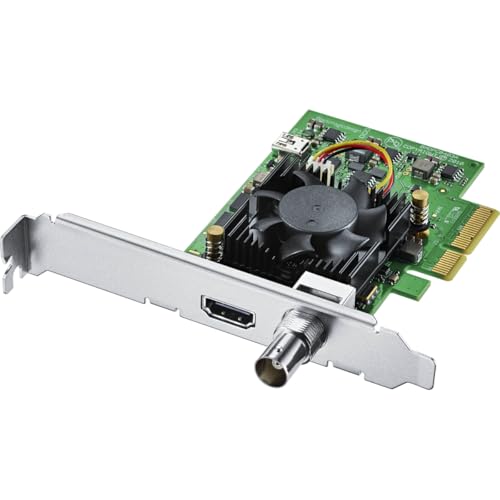
- SDI and HDMI 2.0a inputs
- 4K, HDR, and Rec. 2020 support
- Compatible with Linux, Windows, and Mac OS X
Best For: Professional broadcast and 4K capture workflows
Premium HDMI 2.1 Pick

- 4K144 capture and passthrough
- HDMI 2.1 with VRR passthrough
- Up to 1080p240 capture
Best For: High-refresh-rate console and PC gaming
Best Hardware-Encoding Value

- Built-in H.264 hardware encoder
- 1080p60 capture and passthrough
- Plug-and-play UVC setup
Best For: Simple Full HD console streaming
Portable Budget Option

- 1080p60 or 2K30 output
- Compact plug-and-play design
- Broad OS, device, and software support
Best For: Portable capture and casual streaming
Premium 4K Choice

- 4K60 capture with HDR and VRR passthrough
- Supports 1440p144, 1080p240, and ultrawide inputs
- Windows 5.1 audio and RGB24 support
Best For: High-end console and PC streamers
Budget Plug-and-Play Pick

- 4K60 input and loop-out with 1080p60 capture
- Driver-free USB 3.0 setup
- 3.5mm mic input and broad software compatibility
Best For: Affordable 1080p streaming and recording
Multicam PCIe Workhorse
ACASIS 4-HDMI PCIe Capture Card

- Four simultaneous HDMI channels at 1080p60
- Uncompressed, ultra-low-latency PCIe capture
- Built-in cooling and broadcast software support
Best For: Desktop multicamera streaming and production
Best PCIe Hardware Encoder – AVerMedia Live Gamer HD
The AVerMedia Live Gamer HD is a practical capture card with hardware encoder for Windows gaming PCs that need 1080p recording and streaming while reducing CPU usage. Its PCIe design, H.264 encoding, ultra-low latency, and HDMI pass-through make it well suited to console or PC gameplay.
Best For: Windows users who want internal 1080p gameplay capture with low-latency pass-through and reduced processor load.
Pros:
- H.264 hardware encoding helps reduce CPU usage.
- Captures and streams gameplay in Full HD 1080p.
- Supports HDMI pass-through, TimeShift recording, and popular streaming software.
- Works with consoles including Xbox, PlayStation, Wii U, and Nintendo Switch.
Cons:
- Requires an available PCIe x1 slot and a compatible Windows setup.
- Its listed minimum operating system is Windows 8, so platform compatibility should be checked.
This is a strong fit for a desktop streaming setup where internal installation and hardware-assisted encoding matter more than portability.
Best Portable Capture Card – Elgato Game Capture Neo
The Elgato Game Capture Neo is a compact USB capture card with a hardware-focused capture workflow for consoles, computers, and mobile devices. It preserves 4K60 HDR pass-through while capturing Full HD at 1080p60, making it a flexible choice for modern gaming setups.
Best For: Gamers who want a small USB device for 1080p60 capture, 4K60 HDR pass-through, and broad device compatibility.
Pros:
- Compact design is about the size of a smartphone.
- Supports 4K60 HDR pass-through without lowering the console display resolution.
- Captures Full HD video at 1080p60.
- Works with PlayStation, Xbox, Switch, iPhone, computers, tablets, and multiple software applications.
Cons:
- It is a USB 3.0 device, so the host computer needs a compatible port.
- The supplied capture resolution is listed as 1080p rather than 4K capture.
Choose this model when portability and simple USB connectivity are priorities, especially if you want high-resolution pass-through alongside Full HD recording.
Best Standalone Hardware Encoder – UNISHEEN 1080p60 HDMI Encoder
The UNISHEEN BM1000 is a standalone capture card with hardware encoder that sends 1080p60 video directly to network services without requiring PC software. Browser-based setup, H.265/H.264 support, and protocols such as RTMP, SRT, RTSP, HLS, and WebRTC make it especially useful for distributed streaming and IPTV workflows.
Best For: Live events, remote monitoring, digital signage, IPTV, and network streaming setups that need an independent encoder.
Pros:
- Dedicated H.265/H.264 hardware encoding supports 1080p60 output.
- Supports a broad range of streaming and distribution protocols.
- Browser-based setup requires no PC software or drivers.
- Includes HDMI audio support, 3.5mm audio input, and OSD overlays for text, logos, or timestamps.
Cons:
- Advanced configuration requires basic networking knowledge.
- It is an HDMI network encoder rather than a general-purpose USB or PCIe capture card.
- Power is supplied at 12V DC, and the listed package has no plug.
This model stands out for installations where reliable, always-on IP distribution matters more than conventional desktop recording software.
Best 4K PCIe Capture Card – Blackmagic DeckLink Mini Recorder 4K
The Blackmagic Design DeckLink Mini Recorder 4K is a professional PCIe capture card for systems that need SDI and HDMI input, including Ultra HD workflows. It supports 10-bit SD, HD, and Ultra HD SDI capture, HDMI 2.0a input, HDR recording, and Rec. 2020 color space support.
Best For: Broadcast, live-production, custom capture, and mobile video environments requiring SDI, HDMI, and 4K compatibility.
Pros:
- Provides both SDI and HDMI 2.0a video inputs.
- Supports 4K capture, HDR recording, and Rec. 2020 color space.
- Includes 16 channels of embedded SDI audio.
- Compatible with Linux, Windows, and Mac OS X systems.
Cons:
- Requires a Gen 2 PCIe Express 4-lane slot or compatible larger slot.
- Its professional feature set may be more than basic gameplay streamers need.
- The supplied notes describe capture inputs but do not specify hardware encoding.
This is the strongest option here for professional 4K signal acquisition, but buyers specifically seeking a capture card with hardware encoder should verify their encoding requirements separately.
Premium HDMI 2.1 Pick – Elgato 4K X
If you need a capture card with hardware encoder capabilities for high-end console or PC streaming, the Elgato 4K X is built around next-generation HDMI 2.1 connectivity. It supports 4K144 capture and passthrough, VRR passthrough, HDR10, and up to 1080p240 capture, while USB 3.2 Gen 2 helps keep latency low.
Best For: Gamers who want high refresh rates, VRR passthrough, and broad compatibility with PS5, Xbox Series X, Switch, PC, and Mac.
Pros:
- Supports 4K144 capture and passthrough with HDMI 2.1.
- Offers VRR passthrough and HDR10 for smoother, more capable gaming setups.
- Captures up to 1080p240 and works with OBS, Streamlabs, Twitch Studio, and other apps.
Cons:
- Requires a USB 3.2 Gen 2 port for its full capture capabilities.
- Its listed video capture resolution is 1080p, despite supporting higher-resolution passthrough.
The 4K X is the most feature-rich option here for users with modern HDMI 2.1 equipment. It is a strong fit for high-refresh-rate gaming, though its advanced requirements may be more than a basic streaming setup needs.
Best Hardware-Encoding Value – AVerMedia Live Gamer Mini
The AVerMedia Live Gamer Mini is a practical capture card with hardware encoder support for straightforward 1080p streaming. Its built-in H.264 encoder processes video and audio on the device, helping reduce CPU load, while HDMI passthrough delivers 1080p60 gameplay without added latency.
Best For: Streamers who want compact plug-and-play 1080p60 capture for consoles and common broadcasting software.
Pros:
- Built-in H.264 hardware encoder reduces processing demands on the computer.
- Provides 1080p60 capture and zero-lag 1080p60 HDMI passthrough.
- Uses UVC plug-and-play operation without driver installation on Windows or macOS.
Cons:
- Capture resolution is limited to 1080p.
- Uses USB 2.0 rather than a faster USB interface.
- Its feature set is focused on Full HD rather than 4K workflows.
For reliable Full HD streaming, the Live Gamer Mini offers one of the clearest hardware-encoder designs in this group. It is especially appealing when low CPU usage and simple setup matter more than 4K capture.
Portable Budget Option – USB 3.0 HDMI Capture Card
This compact USB 3.0 model is a flexible entry-level option for shoppers comparing a capture card with hardware encoder features for recording, meetings, and live streaming. It accepts up to 4K at 30Hz and outputs up to 1080p at 60Hz or 2K at 30Hz, with USB-C and USB connectivity for different setups.
Best For: Portable capture, online meetings, casual game streaming, and users who need broad device and software compatibility.
Pros:
- Supports up to 1080p60 output and 2K30 output through USB 3.0.
- Compact, lightweight design requires no external power or additional drivers.
- Works with Windows, macOS, Linux, Android, OBS, Zoom, and multiple consoles and cameras.
Cons:
- It is intended for capture software and cannot directly cast to a monitor or TV.
- Video decoding introduces millisecond-level latency.
- USB 2.0 connections may limit bandwidth, resolution, or format support.
This model is best viewed as a versatile, travel-friendly capture solution rather than a premium gaming device. Its broad compatibility and USB 3.0 performance are useful, but setup details such as software audio configuration and port selection may require attention.
Premium 4K Choice – AVerMedia Live Gamer ULTRA S
If you need a capture card with hardware encoder capabilities for high-resolution console or PC streaming, the AVerMedia Live Gamer ULTRA S is a feature-rich option. It supports 4K60 capture, HDR and VRR passthrough, ultrawide inputs, and RGB24 full-color capture on Windows.
Best For: Serious gamers and streamers using PS5, Xbox Series X/S, Switch 2, or PC setups with 4K, HDR, VRR, or high-refresh displays.
Pros:
- Captures up to 4K60 and supports 1440p144 or 1080p240 workflows.
- Offers HDR and VRR passthrough for smooth gaming while recording.
- Supports ultrawide inputs, 5.1-channel audio, and Windows, macOS, and iPadOS devices.
Cons:
- Its most advanced RGB24 and 5.1 audio features are tied to Windows software workflows.
- It is a premium, feature-dense choice that may exceed basic streaming needs.
The Live Gamer ULTRA S stands out when display passthrough quality and flexible high-refresh capture matter as much as resolution. Its broad device support and 3-year warranty add practical value for long-term streaming setups.
Budget Plug-and-Play Pick – VIXLW 4K HDMI Capture Card
This VIXLW model is a practical capture card with hardware encoder-style convenience for straightforward streaming and recording. It accepts 4K60 HDMI input and loop-out while capturing up to 1080p60 through USB 3.0, with no driver or external power supply required.
Best For: Budget-conscious streamers, gamers, presenters, and camera users who want simple USB connectivity and HDMI passthrough.
Pros:
- Supports 4K60 HDMI input and loop-out with up to 1080p60 capture.
- Plug-and-play design works with OBS, Streamlabs, Zoom, VLC, and other software.
- Includes low-latency passthrough and a 3.5mm microphone input for commentary.
Cons:
- It does not support 4K120 or 4K144 input.
- The microphone input does not record party chat and accepts only a 3.5mm microphone headset.
- The listed warranty is limited to 60 days.
For basic 1080p streaming, the VIXLW combines broad compatibility with useful loop-out functionality at a simple USB 3.0 setup. Its limitations are worth weighing if you need 4K capture, party-chat recording, or longer warranty coverage.
Multicam PCIe Workhorse – ACASIS 4-HDMI PCIe Capture Card
For a desktop production system, this ACASIS capture card with hardware encoder-oriented internal PCIe design provides four HDMI inputs for simultaneous 1080p60 capture. Its uncompressed, ultra-low-latency workflow is aimed at multicamera streaming, teaching, conferencing, and broadcasting.
Best For: Desktop users building multicamera or multi-source production systems with an available PCIe x4, x8, or x16 slot.
Pros:
- Captures four HDMI sources simultaneously at up to 1080p60.
- Uses an internal PCIe connection for uncompressed, ultra-low-latency capture.
- Built-in cooling fan supports sustained operation, and the card works with major broadcast software.
Cons:
- This is an internal PCIe card, so it is not suited to laptops or simple portable setups.
- Its listed capture resolution is 1080p rather than 4K.
- Compatibility details center on Windows and Linux systems, with older Windows versions specifically listed.
The ACASIS is specialized rather than universally convenient, but four simultaneous HDMI channels make it compelling for multicam production. Choose it when a desktop workstation and multiple live sources matter more than portability or 4K capture.
How We Picked the Best Capture Card with Hardware Encoder
We compared these capture devices by encoder support, maximum input and pass-through resolution, frame-rate capability, connection type, latency, software compatibility, and installation requirements. We also considered whether each model is better suited to gaming, professional video production, remote teaching, live events, or general-purpose recording.
A true Capture Card with Hardware Encoder can reduce the workload placed on your CPU, but specifications vary widely. Some products capture video while the computer performs encoding; others include dedicated H.264 or H.265 processing for direct network streaming. Check the product’s exact workflow before assuming every listed resolution can be encoded internally.
Quick Comparison
- Best for high-end gaming: Choose a model with HDMI 2.1, 4K capture, high refresh-rate pass-through, and very low latency.
- Best for simple streaming: A USB 1080p60 card with plug-and-play support is usually the easiest option for OBS, consoles, and laptops.
- Best for direct streaming: An HDMI encoder with RTMP, RTSP, SRT, HLS, or WebRTC support can stream without relying entirely on a host computer.
- Best for desktop production: PCIe cards provide a tidy, permanent installation and can suit studio, conferencing, and broadcast systems.
Key Buying Factors for a Capture Card with Hardware Encoder
Encoding Format and Workload
H.264 offers broad compatibility with streaming platforms and editing software. H.265 can deliver better compression at similar quality, but support is less universal. Confirm whether encoding is performed on the card, whether it supports standalone streaming, and which resolutions and frame rates are available in that mode.
Resolution, Refresh Rate, and HDR
Capture resolution and pass-through resolution are not always the same. A card may capture at 1080p while passing through 4K, or capture 4K at a lower frame rate. For modern consoles and gaming PCs, verify support for 4K60, HDR, variable refresh rate, and high-refresh 1440p or 1080p signals as needed.
Connection and Compatibility
USB models are portable and work well with laptops, while PCIe cards require an open desktop slot. Check USB bandwidth, operating-system support, HDMI input requirements, driver availability, and compatibility with OBS or your preferred production software. HDMI is generally unsuitable for protected commercial video sources, so verify content rights and signal compatibility.
Latency and Audio
Low latency matters for live gameplay, monitoring, and interactive broadcasts. HDMI pass-through is typically preferable when you play on a television or monitor while capturing separately. Also check audio pass-through, embedded HDMI audio, microphone inputs, and whether the device requires separate audio routing.
Who Should Buy Which Capture Card with Hardware Encoder?
Console streamers should prioritize plug-and-play USB connectivity, 1080p60 or 4K support, reliable pass-through, and compatibility with PS5, Xbox, or Switch. Competitive PC gamers should look for high-refresh pass-through and minimal delay, particularly if using HDMI 2.1 equipment.
Creators with modest computers benefit most from a Capture Card with Hardware Encoder that can reduce CPU demands during recording or streaming. Broadcasters and network video users should consider dedicated HDMI-to-IP encoders with the protocols their platform requires. Studio and conferencing users may prefer PCIe hardware for permanent installation, predictable performance, and integration with professional video systems.