
Choosing the right equalizer can make spoken messages easier to understand, vocals more natural, and worship music more controlled. The best fit depends on your mixer, speakers, room acoustics, and operator experience.
This roundup includes compact tone controls, rack-mount graphic EQs, and more advanced digital options so churches can match their sound system and budget without adding unnecessary complexity.
Best 10 Audio Equalizers for Church Sound Systems Picks for 2026
Rack-Mount Control
EQ-215 15-Band Stereo Equalizer
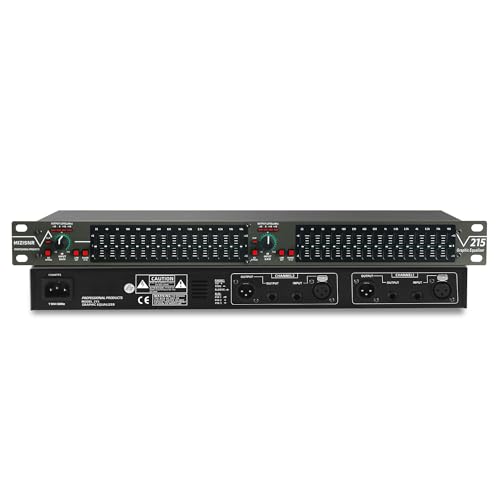
- Dual 15-band graphic control
- Low-cut and bypass switches
- XLR and 1/4-inch connectivity
Best For: Church racks needing practical analog EQ control
Balanced Tone Shaping
Schiit Lokius 6-Band Equalizer

- Six broad frequency bands
- Balanced and single-ended support
- Compact tone-control design
Best For: Smaller systems needing simple tonal adjustments
All-in-One PA
EXOTON MX-P12 Portable Church System

- Dual 12-inch speaker system
- 10-channel mixer with EQ controls
- Bluetooth and multiple playback inputs
Best For: Mobile church services and larger events
Visual Feedback Control
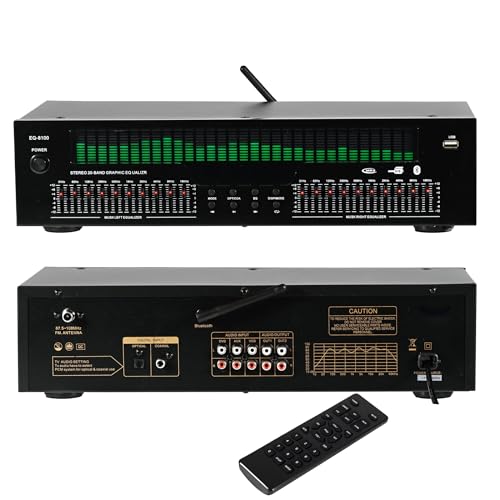
- 20-band graphic equalizer
- 31-band real-time spectrum analyzer
- Digital, analog, USB, and Bluetooth inputs
Best For: Church systems needing detailed EQ and visual monitoring
Flexible Digital Tuning

- 20 independent bands for detailed tonal shaping
- Bluetooth 6.0, USB, optical, and coaxial inputs
- Spectrum display, noise gate, and saved presets
Best For: Churches needing extensive EQ control and multiple digital inputs
Compact Analog Control

- Seven bands with ±12 dB adjustment
- Dual-channel design with 3.5mm connectivity
- Compact aluminum-alloy freestanding format
Best For: Small audio stations, headphone monitoring, and portable setups
Simple Stereo Routing

- Seven-band ±12 dB tonal adjustment
- 14 dB preamp gain for lower-output sources
- Simultaneous RCA and 3.5mm outputs
Best For: Compact stereo monitoring, streaming, and auxiliary audio paths
Versatile Rack-Mount Control
15-Band Stereo Graphic Equalizer

- 15 bands per channel with ±12 dB adjustment
- Adjustable low-cut control for unwanted low-end noise
- XLR, TRS, bass output, and 1U rack-mount design
Best For: Churches needing detailed dual-channel EQ control and rack integration.
Compact Stereo Refinement
Douk Audio T7 7-Band Equalizer

- Seven bands covering low, mid, and high frequencies
- XLR and RCA inputs and outputs
- Compact design with high stated SNR
Best For: Small church systems or stereo setups needing simple, compact EQ adjustment.
Digital Live-Sound Precision
31-Band Equalizer with PC Tuning

- 31-band dual-channel DSP equalization
- PC tuning, 10 presets, and EQ bypass
- Noise reduction plus XLR and TRS balanced connectivity
Best For: Churches with larger systems that need detailed digital tuning and repeatable settings.
Rack-Mount Control – EQ-215 15-Band Stereo Equalizer
For churches comparing audio equalizers for church sound systems, the EQ-215 offers practical hands-on control in a standard 1U rack format. Its dual channels, low-cut filter, bypass switch, and balanced XLR connectivity make it suitable for shaping vocals, music, and other live signals.
Best For: Churches and live audio setups needing straightforward dual-channel rack EQ control.
Pros:
- 15 adjustable bands per channel with up to ±12dB range
- Low-cut switch helps reduce wind noise, floor rumble, and electrical hum
- Includes XLR balanced and 1/4-inch TRS unbalanced inputs and outputs
- Standard 1U rack-mount design with bypass for easier troubleshooting
Cons:
- Manual graphic controls require hands-on setup
- No digital display, presets, or wireless connectivity are listed
The EQ-215 is a focused choice when a church wants dependable analog tone shaping without adding unnecessary complexity. Its feature set is especially practical for installed racks and live sound adjustments.
Balanced Tone Shaping – Schiit Lokius 6-Band Equalizer
The Schiit Lokius is a compact tone-control option for buyers considering audio equalizers for church sound systems, particularly smaller balanced or single-ended setups. Six broad frequency bands provide a simple way to adjust bass, mids, and highs without an overly complex interface.
Best For: Smaller church systems, speaker chains, or headphone and monitoring setups requiring flexible balanced tone control.
Pros:
- Supports balanced and single-ended system integration
- Six bands span 20Hz to 16kHz for broad tonal adjustments
- Provides up to ±12dB adjustment at the lowest and highest bands
Cons:
- Six bands offer less detailed correction than a 15- or 20-band graphic EQ
- Supplied power supply is limited to 110–120VAC regions
- Specific church PA features such as low-cut or bypass are not listed
Lokius favors intuitive overall tone shaping rather than detailed room correction or feedback management. It can fit a church’s smaller signal chain, but larger venues may benefit from a more extensively configurable rack EQ.
All-in-One PA – EXOTON MX-P12 Portable Church System
For churches seeking audio equalizers for church sound systems in a portable package, the EXOTON MX-P12 combines two 12-inch speakers with a built-in 10-channel mixer. Independent channel volume and EQ adjustments support microphones, instruments, and playback devices without requiring a separate equalizer.
Best For: Churches needing a mobile, self-contained PA for services, events, and larger indoor or outdoor gatherings.
Pros:
- Dual 12-inch speakers provide room-filling sound for larger events
- Built-in 10-channel mixer includes independent channel EQ adjustments
- Supports Bluetooth, USB/SD/FM playback, microphones, guitars, and keyboards
- Includes speaker stands, with a listed 1-year manufacturer warranty
Cons:
- Channel EQ is integrated into the PA rather than a dedicated graphic equalizer
- The 75-pound system is less convenient for frequent transport
- Detailed band counts and adjustment ranges are not specified
The MX-P12 is best viewed as a complete portable sound solution rather than a precision EQ processor. Its mixer and speaker package can simplify setup for churches that prioritize mobility and broad input flexibility.
Visual Feedback Control – EQ8100 20-Band Spectrum EQ
The EQ8100 is a feature-rich option for churches evaluating audio equalizers for church sound systems and wanting visual frequency feedback. Its 20-band graphic EQ, 31-band spectrum analyzer, digital and analog inputs, and rack-ready 1U chassis provide extensive control for live stages, monitors, and studio-style systems.
Best For: Churches and live sound operators who want detailed EQ adjustment with real-time spectrum monitoring.
Pros:
- 20-band graphic equalizer supports detailed frequency shaping
- 31-band spectrum analyzer displays frequency levels in real time
- Offers optical, coaxial, USB, Bluetooth, and RCA connectivity
- Auto-save presets and 12 customizable modes support repeatable setups
Cons:
- Its extensive controls may require more setup time and operator familiarity
- Product dimensions are listed unusually as 19 x 19 x 19 inches, so rack clearance should be verified
- Warranty details are not clearly specified beyond following FBA rules
The EQ8100 stands out when visual monitoring and multiple connection formats matter. It offers more signal-processing flexibility than a basic analog EQ, though buyers should confirm its physical dimensions and workflow fit before installation.
Flexible Digital Tuning – 20-Band Audio Equalizer
For church sound systems that need detailed control across vocals, music, and presentations, this 20-band unit offers broad adjustment flexibility. Its Bluetooth, USB, optical, and coaxial connectivity also makes it adaptable to varied audio sources, though its RCA-based outputs should match your mixer, amplifier, or powered speakers.
Best For: Churches seeking extensive tonal control, digital-source compatibility, and adjustable noise management.
Pros:
- 20 independent bands support precise frequency shaping.
- A 31-band spectrum display provides real-time visual feedback.
- Bluetooth 6.0, USB, optical, and coaxial inputs accommodate multiple sources.
- Noise-gate processing and auto-saving presets simplify repeatable operation.
Cons:
- The listed dual-RCA outputs may require suitable adapters or interfaces in some church installations.
- Its 16.9-inch width may require dedicated rack or shelf space.
This is the most feature-rich option here for audio equalizers for church sound systems when fine control and flexible source connectivity matter. Confirm the RCA connections and available space before purchasing.
Compact Analog Control – 7-Band Dual-Channel Equalizer
This compact seven-band equalizer can suit a small church setup, auxiliary audio path, or portable recording and streaming station. It provides dual-channel control and a 3.5mm interface, but its 5–12V DC power requirement means buyers should plan for a compatible power supply.
Best For: Small systems, headphone monitoring, and compact recording or streaming applications.
Pros:
- Seven adjustable bands cover 60 Hz through 15 kHz.
- Each band offers a ±12 dB control range.
- Dual-channel design and 3.5mm connectivity support flexible personal audio use.
- Aluminum-alloy construction is compact and freestanding.
Cons:
- It requires 5V or 12V DC power rather than standard 110V AC.
- Its 3.5mm-oriented design may be less convenient for full-size church mixing consoles.
- It has fewer bands than the 20-band alternative.
Consider this model when space and simple hands-on adjustment are more important than extensive routing. Verify the power arrangement and connector compatibility with the church’s existing equipment.
Simple Stereo Routing – 7-Band EQ with Preamp Gain
For audio equalizers for church sound systems where a compact stereo unit is needed for basic tonal shaping, this model combines seven-band adjustment with preamp gain. Its simultaneous RCA and 3.5mm outputs can feed headphones and desktop speakers, while the selected input must be either RCA or 3.5mm.
Best For: Compact stereo setups, auxiliary monitoring, streaming, and voice-focused audio paths.
Pros:
- Seven frequency bands provide ±12 dB adjustment from 60 Hz to 15 kHz.
- 5x, or 14 dB, preamp gain can support lower-output sources.
- TRS and TRRS 3.5mm compatibility supports headsets with microphones.
- RCA and 3.5mm outputs can operate simultaneously.
Cons:
- Only one input type can be selected at a time.
- Its small form factor may be less suitable for larger permanent sound-system installations.
- The notes do not specify a standard 110V power arrangement.
This is a practical choice for a compact auxiliary or monitoring role rather than a full church mixing-console replacement. Its routing flexibility is useful, but confirm power and input requirements before integrating it.
Versatile Rack-Mount Control – 15-Band Stereo Graphic Equalizer
For church sound systems that need hands-on control across two channels, this 15-band stereo graphic equalizer offers flexible shaping for speech, music, and live worship audio. Its low-cut control, balanced XLR connections, and 1U rack-mount design make it practical for installed or mobile setups.
Best For: Churches needing detailed dual-channel EQ control and rack integration.
Pros:
- Provides 15 adjustable bands per channel with a ±12 dB range.
- Includes a low-cut feature with adjustable cutoff frequency for reducing unwanted low-end noise.
- Offers XLR balanced and 1/4-inch TRS connections, plus a dedicated bass output.
- Fits a standard 1U rack space and includes a bypass mode.
Cons:
- Analog controls require manual adjustment rather than PC-based tuning.
- The feature-rich layout may be more than a small, simple church system needs.
This is a strong choice when operators want immediate, physical control over vocal clarity, room response, and low-frequency management. The dual-channel layout and installation-friendly connections also support more involved church audio systems.
Compact Stereo Refinement – Douk Audio T7 7-Band Equalizer
The Douk Audio T7 is a compact option for church sound systems that need basic frequency correction without a full rack-style processor. Its seven fixed frequency bands, XLR and RCA connectivity, and straightforward operation can help refine a compatible stereo audio chain.
Best For: Small church systems or stereo setups needing simple, compact EQ adjustment.
Pros:
- Offers seven frequency bands from 64 Hz to 8 kHz with ±6 dB adjustment.
- Provides both XLR and RCA inputs and outputs for connection flexibility.
- Lists a signal-to-noise ratio above 104 dB and distortion as low as 0.003%.
- Compact aluminum housing is designed for easy placement and shielding against interference.
Cons:
- Seven bands provide less detailed control than 15- or 31-band equalizers.
- It has no volume control knob and outputs at the rated level.
- Its home-stereo-oriented design may not suit complex live church signal chains.
Choose the T7 when space, simplicity, and flexible stereo connectivity matter more than extensive sound-shaping control. Confirm that the lack of a volume control fits your existing mixer or amplifier workflow.
Digital Live-Sound Precision – 31-Band Equalizer with PC Tuning
For church sound systems requiring detailed tuning, this digital 31-band dual-channel equalizer provides extensive control over vocals, music, and room response. PC tuning, presets, an LED display, EQ bypass, and noise-reduction controls make it suited to more demanding live, broadcast, or installed audio workflows.
Best For: Churches with larger systems that need detailed digital tuning and repeatable settings.
Pros:
- Provides 31 adjustable bands for detailed frequency shaping across two channels.
- Supports PC software tuning, 10 EQ presets, and instant EQ bypass for comparisons.
- Includes a seven-band noise-suppression system with adjustments from -3 dB to -9 dB.
- Offers XLR and analog inputs with XLR and TRS balanced outputs.
Cons:
- Its larger feature set may require more setup time and operator familiarity.
- The 5.49-pound, nearly 19-inch chassis is less convenient for compact installations.
- PC tuning may be unnecessary for systems needing only quick front-panel adjustments.
This model is the most capable choice of the three for precise, repeatable system tuning. It makes particular sense when a church regularly manages speech intelligibility, music playback, and changing live-event requirements.
How We Picked the Best Audio Equalizers for Church Sound Systems
We focused on features that matter in worship environments: useful frequency control, channel flexibility, noise performance, connectivity, installation practicality, and ease of adjustment during services. The selection spans affordable analog units, balanced preamp-style equalizers, rack-mount graphic models, and digital options with displays or computer tuning.
Because church systems vary widely, no single model is ideal for every sanctuary. A small installation may benefit from simple, fast tone shaping, while a larger venue may need precise dual-channel control and repeatable settings.
Quick Comparison
| Best For | Look For | Most Suitable Type |
|---|---|---|
| Speech intelligibility | Midrange control and low noise | Simple graphic or digital EQ |
| Worship bands | Multiple bands and stereo flexibility | 15- or 31-band rack EQ |
| Installed PA systems | Balanced inputs, outputs, and rack mounting | Professional dual-channel EQ |
| Portable ministry setups | Integrated amplification and mixing | Portable PA with built-in controls |
| Small rooms or auxiliary playback | Compact size and straightforward operation | Compact tone-control EQ |
Key Buying Factors for Audio Equalizers for Church Sound Systems
Band Count and Control Range
More bands provide finer control, which is useful for reducing feedback and correcting room resonances. A 7-band unit can be adequate for basic shaping, while 15- or 31-band models offer more precise system tuning. Avoid boosting aggressively; small cuts are usually safer and more natural.
Inputs, Outputs, and System Compatibility
Check whether the equalizer uses balanced XLR or TRS connections, unbalanced RCA connections, or 3.5mm inputs. Balanced connections are generally preferable for longer cable runs and professional PA installations. Confirm that the unit fits between the mixer, crossover, amplifier, or powered speakers in your signal chain.
Mono, Stereo, and Dual-Channel Operation
Dual-channel EQs can process left and right signals independently, but many church systems use a mono mix for the main PA. If you need separate monitor, recording, or auxiliary mixes, additional channels may be more valuable than stereo operation.
Noise, Headroom, and Ease of Use
Look for clean operation, sensible gain controls, and clear markings. A display or spectrum analyzer can help with setup, but it should not replace listening tests and proper microphone technique. Controls that volunteers can understand quickly are especially valuable for rotating sound teams.
Who Should Buy Which Audio Equalizers for Church Sound Systems?
Choose a Compact EQ for Small Churches
Small sanctuaries, classrooms, and auxiliary systems may need only basic bass, midrange, and treble shaping. A compact model keeps the rack or desktop setup simple.
Choose a 15-Band EQ for General PA Tuning
A 15-band dual-channel unit is a practical middle ground for many worship systems. It provides enough precision for room correction and feedback management without overwhelming inexperienced operators.
Choose a 31-Band or Digital EQ for Advanced Systems
Larger sanctuaries, installed systems, and technical teams that want repeatable presets may benefit from a 31-band model or computer-tunable digital equalizer. These options are best when someone can configure and maintain them properly.
Choose an Integrated Portable PA for Mobile Ministry
If the priority is portability rather than rack-based system tuning, an all-in-one PA with a mixer and speakers may be more practical than a standalone equalizer. Before buying, verify that its built-in controls meet your needs and that external expansion is possible.