
Choosing the best audio interface for electronic music means balancing clean conversion, dependable drivers, low-latency monitoring, and the inputs your setup actually needs. Whether you produce with headphones, monitor speakers, vocals, hardware synths, or guitar, the right interface can make your workflow faster and more reliable.
We’ve gathered 10 options spanning affordable beginner models, portable USB-C interfaces, and flexible dual-input designs. Use the guide below to narrow the list by connectivity, recording needs, monitoring features, and long-term value.
Best 10 Audio Interface for Electronic Music Picks for 2026
Best Compact Starter
Focusrite Scarlett Solo 3rd Gen

- 24-bit/192kHz recording
- XLR mic and Hi-Z inputs
- Air mode and bundled software
Best For: Solo producers recording vocals, guitar, bass, and electronic tracks
Best Budget USB-C Flexibility

- Two combo XLR/TRS inputs
- USB-C bus-powered setup
- Loopback and direct monitoring
Best For: Mobile creators and home producers needing two inputs and USB-C
Best All-Around Upgrade
Focusrite Scarlett 2i2 4th Gen

- Two mic and Hi-Z inputs
- 120dB dynamic range
- Auto Gain and Clip Safe
Best For: Producers recording two sources at once
Best Value Monitoring
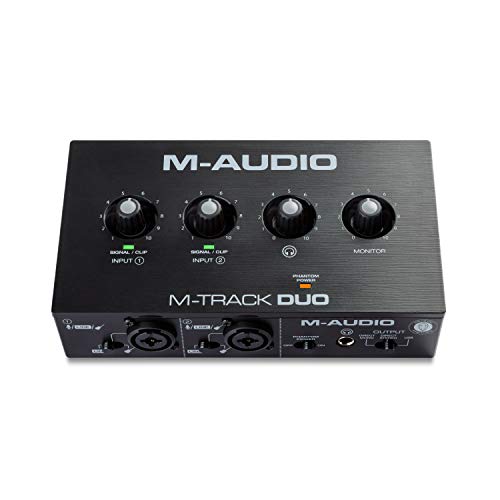
- Two combo mic/line/instrument inputs
- USB/direct zero-latency monitoring
- Includes MPC Beats software
Best For: Beginners recording vocals, instruments, and line-level gear
Studio-Ready Clarity
Focusrite Scarlett Solo 4th Gen

- 24-bit/192kHz recording with 120dB dynamic range
- Air modes enhance vocals and guitars
- Includes Ableton Live Lite and production software
Best For: Compact electronic music setups with one mic and one instrument
Flexible Two-Channel Value
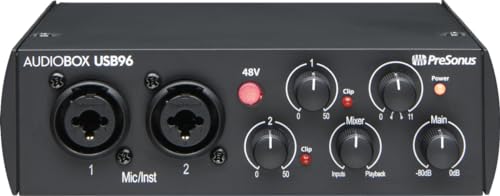
- Two mic preamps, two instrument inputs, and MIDI I/O
- Zero-latency input/playback mixer control
- Includes Studio One Artist and Ableton Live Lite
Best For: Portable setups using MIDI hardware and multiple inputs
Simple Starter Setup
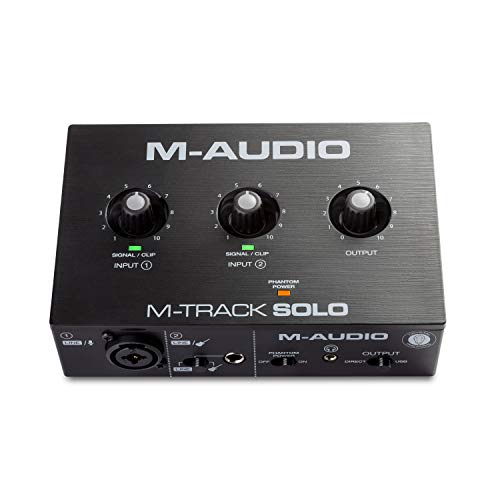
- Combo XLR/line and line/instrument inputs
- USB/Direct switch supports zero-latency monitoring
- Includes MPC Beats production software
Best For: Beginners recording simple electronic music setups
Compact Studio Starter

- 24-bit/192kHz recording with 106dB dynamic range
- Instrument input, 56dB gain, and 48V phantom power
- ProStudio routing, loopback, and direct monitoring
Best For: Beginners and compact home studios
Budget Two-Input Pick

- Two-channel USB interface with XLR and 3.5mm inputs
- 16-bit/48kHz recording with 48V phantom power
- USB-powered and compatible with major beginner DAWs
Best For: Students and first-time home-studio users
Best Compact Starter – Focusrite Scarlett Solo 3rd Gen
The Focusrite Scarlett Solo 3rd Gen is a compact audio interface for electronic music producers who need one microphone input and one Hi-Z instrument input. Its 24-bit/192kHz converters, low-noise outputs, and USB connectivity suit home recording, guitar parts, vocals, and monitoring.
Best For: Solo producers recording vocals, guitar, bass, and electronic tracks in a compact setup.
Pros:
- 24-bit/192kHz recording and high-performance converters
- Dedicated XLR mic preamp and Hi-Z instrument input
- Air mode, Gain Halos, low-noise balanced outputs, and useful bundled software
Cons:
- Only one microphone preamp and one instrument input
- Less suitable for recording several sources simultaneously
The Solo is a practical entry point for electronic music setups centered on one performer or one external instrument at a time. Its included software and three-year warranty add value for new producers.
Best Budget USB-C Flexibility – PIYONE Q2 Alloy Red
The PIYONE Q2 is a straightforward audio interface for electronic music makers who want two inputs, USB-C connectivity, and portable operation. Its combo inputs accept microphones, line sources, or Hi-Z instruments, while loopback and direct monitoring support modern computer-based workflows.
Best For: Mobile creators and home producers needing two inputs, USB-C convenience, and simple monitoring.
Pros:
- 24-bit/192kHz resolution with two combo XLR/TRS inputs
- USB-C handles data and bus power without an external supply
- 48V phantom power, zero-latency direct monitoring, and loopback function
Cons:
- Supplied operating-system details list Windows rather than broad platform compatibility
- Less established feature and software ecosystem than the Focusrite options
The Q2 Alloy Red offers useful flexibility for a compact electronic music rig, especially when two sources or mobile connectivity matter. Its illuminated controls and headphone output also suit dim or portable recording spaces.
Best All-Around Upgrade – Focusrite Scarlett 2i2 4th Gen
The Focusrite Scarlett 2i2 4th Gen is a versatile audio interface for electronic music producers who need two mic or instrument inputs. It combines 24-bit/192kHz recording, a 120dB dynamic range, Auto Gain, Clip Safe, and Air modes for a capable recording and production hub.
Best For: Producers recording two sources at once, including vocals, guitars, instruments, and electronic hardware.
Pros:
- Two mic preamps and two Hi-Z instrument inputs
- 120dB dynamic range with 24-bit/192kHz support
- Auto Gain, Clip Safe, Air modes, and extensive included software
Cons:
- Heavier and larger than the Scarlett Solo
- Two-input design may be limiting for larger hardware setups
The 2i2 4th Gen is the strongest general-purpose choice here for producers who want room to record two inputs without moving to a larger interface. Its automatic level tools can also make recording faster and less error-prone.
Best Value Monitoring – M-Audio M-Track Duo
The M-Audio M-Track Duo is a budget-friendly audio interface for electronic music beginners who need two combination inputs and simple monitoring. It supports mic, line, and instrument signals at up to 48kHz and includes USB/direct monitoring plus MPC Beats software.
Best For: Beginners recording vocals, guitar, keyboards, or line-level gear on a Mac, PC, iOS, or Android setup.
Pros:
- Two combo XLR/line/instrument inputs with phantom power
- USB/direct switch enables zero-latency monitoring
- Includes MPC Beats and supports headphone and stereo monitor outputs
Cons:
- Maximum sample rate is 48kHz, below the other listed interfaces
- One-year manufacturer warranty is shorter than the Focusrite options
The M-Track Duo is a sensible low-cost option for basic electronic music recording and monitoring. It gives beginners the essential inputs and software to start, though its lower maximum sample rate is worth considering for more demanding production workflows.
Studio-Ready Clarity – Focusrite Scarlett Solo 4th Gen
The Focusrite Scarlett Solo 4th Gen is a strong choice if you want an audio interface for electronic music with high-resolution recording, straightforward controls, and a compact setup. Its 24-bit/192kHz support, 120dB dynamic range, and USB-C connectivity suit producers working with vocals, guitar, software instruments, and headphones or studio monitors.
Best For: Home producers who want a compact, high-resolution interface for recording vocals or instruments alongside electronic music projects.
Pros:
- 24-bit/192kHz recording with a stated 120dB dynamic range.
- Air modes add presence and harmonic drive to vocals and guitars.
- Includes Ableton Live Lite, Pro Tools Intro+, Cubase LE, and Hitmaker Expansion.
- Compatible with Mac, Windows, and iPad.
Cons:
- Only one XLR microphone preamp and one Hi-Z instrument input.
- Designed for a compact two-channel setup rather than larger recording sessions.
The Solo 4th Gen stands out for clean specifications and a useful software bundle. It is especially appealing when your electronic music workflow needs one microphone and one instrument input rather than extensive external routing.
Flexible Two-Channel Value – PreSonus AudioBox 96
The PreSonus AudioBox 96 25th Anniversary is a practical audio interface for electronic music when you need two mic or instrument inputs, MIDI I/O, and portable USB bus power. Its 24-bit/96kHz converters and zero-latency mixer control make it suitable for recording hardware, vocals, guitars, and software-based productions.
Best For: Producers who want MIDI connectivity, two Class-A mic preamps, and a portable interface for a broader range of home-recording sources.
Pros:
- Two Class-A mic preamps and two high-headroom instrument inputs.
- Includes MIDI input and output for compatible hardware.
- Zero-latency monitoring with a custom input/playback blend.
- Includes Studio One Artist, Ableton Live Lite, and Studio Magic Plug-In Suite.
Cons:
- Maximum sample rate is 24-bit/96kHz rather than 192kHz.
- Uses USB 2.0 and weighs 2 pounds, making it less lightweight than some compact options.
- Global phantom power may be less flexible for mixed microphone setups.
For electronic musicians combining a computer with MIDI gear or multiple recording sources, the AudioBox 96 offers useful connectivity and monitoring controls. Its software bundle also gives new producers a substantial starting package.
Simple Starter Setup – M-AUDIO M-Track Solo
The M-AUDIO M-Track Solo is an accessible audio interface for electronic music, podcasting, or live streaming. It combines one combo XLR/line input, one line/instrument input, zero-latency USB/Direct monitoring, and a compact design for basic recording with a Mac or PC.
Best For: Beginners and mobile creators who need an affordable two-channel interface for vocals, guitar, line-level gear, or simple electronic music projects.
Pros:
- One combo XLR/line input and one line/instrument input provide flexible source options.
- Phantom power supports condenser microphones.
- USB/Direct monitoring helps provide zero-latency monitoring.
- Includes MPC Beats for starting music-production projects.
Cons:
- Maximum sample rate is 48kHz.
- Provides one microphone input, limiting simultaneous vocal recording.
- Uses RCA outputs and a 1/8-inch headphone output rather than larger studio-style connections.
The M-Track Solo keeps the essentials uncomplicated and portable. It is a sensible fit for first-time producers or creators who prioritize basic inputs, direct monitoring, and bundled production software over advanced resolution or expandability.
Compact Studio Starter – MAONO PS22 Lite
The MAONO PS22 Lite is a practical audio interface for electronic music creators who want high-resolution recording, direct monitoring, and flexible computer-based routing in a compact format. Its 24-bit/192kHz support, dedicated instrument input, and compatibility with Ableton Live, Pro Tools, and Cubase make it suitable for building a small home setup.
Best For: Beginners, home producers, guitarists, vocalists, and streamers who need a compact interface with software-assisted routing.
Pros:
- Records at up to 24-bit/192kHz with a stated 106dB dynamic range.
- Offers up to 56dB of preamp gain and switchable 48V phantom power.
- Includes an instrument input, direct monitoring, and ProStudio routing with loopback support.
- Works with Mac, Windows, and iPads and includes USB-C connection options.
Cons:
- Its compact two-input design may be limiting for larger recording setups.
- The included routing software may require additional setup for beginners.
Choose the PS22 Lite if you value detailed recording and straightforward monitoring without taking up much desk space. It is especially appealing for electronic musicians who also record vocals, guitar, or streamed content.
Budget Two-Input Pick – XTUGA Q-12
The XTUGA Q-12 is a budget-friendly audio interface for electronic music beginners who need two basic inputs and a simple USB workflow. It supports 16-bit/48kHz recording, XLR and 3.5mm microphone connections, and software such as Ableton Live and FL Studio.
Best For: Students, first-time home-studio users, karaoke setups, and creators who need an affordable two-channel interface.
Pros:
- Provides two inputs with XLR and 3.5mm microphone connectivity.
- Includes switchable 48V phantom power for compatible condenser microphones.
- USB-powered plug-and-play design requires no external adapter.
- Supports Audacity, Ableton Live, FL Studio, and Pro Tools.
Cons:
- Its maximum 16-bit/48kHz resolution is more limited than higher-resolution alternatives.
- The two-channel layout may not suit complex electronic music recording chains.
The Q-12 makes sense when price and simplicity matter more than advanced routing or high-resolution capture. It covers the essentials for learning a DAW, tracking a microphone, or adding a basic input device to a computer setup.
Mobile Creator Hub – MAONO P2 Hybrid
The MAONO P2 Hybrid is a versatile audio interface for electronic music creators who switch between computer production and mobile content creation. Its dual USB connectivity can link a computer and phone or iPad simultaneously, while 24-bit/192kHz recording, dual XLR inputs, loopback, and ASIO support cover both studio and streaming workflows.
Best For: Producers, streamers, and musician-creators who record on computers and mobile devices or need flexible routing for instruments, vocals, and desktop audio.
Pros:
- Supports simultaneous computer and phone or iPad connectivity through dual USB ports.
- Provides dual XLR inputs with up to 56dB of gain and 24-bit/192kHz recording.
- Offers loopback, dedicated channels, independent mute controls, and direct monitoring.
- Includes ProStudio 2 for routing software, browser audio, and VST effects.
Cons:
- Its extensive routing features may take time to configure.
- Designed around creator and streaming workflows, which may exceed the needs of a simple two-input setup.
The P2 Hybrid is the strongest fit here for users who need more than basic recording. Its mobile connectivity and loopback tools make it a flexible centerpiece for electronic production, live performance content, tutorials, and streams.
How We Picked the Best Audio Interface for Electronic Music
We focused on interfaces that suit common electronic-music workflows: recording vocals or instruments, monitoring software instruments with low latency, connecting studio monitors, and integrating occasional hardware gear. We considered input and output layouts, USB connectivity, stated resolution, direct monitoring, compatibility, portability, and overall ease of use. Because these products cover different budgets and capabilities, the best choice depends on whether you need a simple solo-production setup or room to record multiple sources at once.
Quick Comparison
| Best For | What to Look For |
|---|---|
| Solo producers | One high-quality mic or instrument input, headphone output, and compact size |
| Vocals and guitar | Combo XLR/TRS input, instrument support, and direct monitoring |
| Stereo hardware | Two independent inputs and suitable line-level connectivity |
| Streaming and mobile work | Simple controls, device compatibility, and flexible routing |
| Growing home studios | Reliable drivers, balanced monitor outputs, and useful headroom |
Key Buying Factors for an Audio Interface for Electronic Music
Inputs and Recording Plans
One input is enough for a producer who mainly works in-the-box and records occasional vocals or guitar. Choose two inputs if you want to capture stereo hardware, record a vocalist and instrument together, or keep more routing options available. Combo inputs are convenient because they accept microphone, line, and instrument connections, but verify the interface’s intended input modes before connecting external gear.
Latency, Monitoring, and Sound Quality
Low latency depends on the interface, driver stability, computer, buffer settings, and project complexity—not just the advertised bit depth or sample rate. Direct monitoring is useful when recording vocals or guitar because it lets you hear the input with minimal delay. For electronic production, clean headphone output and balanced monitor connections are equally important for judging bass, stereo width, and detail accurately.
USB, Compatibility, and Power
Check whether the interface uses USB-C, USB-A, or an adapter, and confirm compatibility with your computer, iPad, or phone before buying. Bus-powered models are convenient for portable setups, while mobile use may require an appropriate adapter or additional power. Also check whether the manufacturer provides current drivers and control software for your operating system.
Controls and Practical Design
Large gain controls, clear meters, separate headphone and monitor volume, phantom power, and a front-panel instrument input can make daily use much easier. If you work with condenser microphones, confirm that 48V phantom power is included. A sturdy enclosure and accessible connections matter if the interface will be moved frequently.
Who Should Buy Which Audio Interface for Electronic Music?
Choose a compact single-input model if you are a beginner, beatmaker, or solo producer who mostly uses software instruments. A two-input interface is the better all-around choice for recording vocals, guitar, stereo synthesizers, or occasional collaboration. Look for a mobile-friendly model if you produce away from your desk or stream from multiple devices. If you expect your setup to expand, prioritize dependable drivers, balanced outputs, and two useful inputs rather than paying extra for specifications you will not use.