
Finding the best audio interface for guitar and vocals means balancing clean preamps, instrument-friendly inputs, monitoring, and easy setup. The right model can make a home-recording rig feel simple without sacrificing useful recording quality.
We compared 10 popular USB interfaces across input flexibility, recording resolution, connectivity, software support, and value to help you choose a practical fit for songwriting, demos, streaming, or more polished productions.
Best 10 Audio Interface for Guitar and Vocals Picks for 2026
Reliable Starter
Focusrite Scarlett Solo 3rd Gen

- Mic preamp plus Hi-Z instrument input
- Air mode and 24-bit/192kHz recording
- Includes a broad starter software bundle
Best For: Solo guitarists and vocalists building a home setup
Portable Value Pick

- Two combo inputs for mic and guitar
- USB-C bus power and plug-and-play setup
- Direct monitoring and 24-bit/192kHz audio
Best For: Portable two-channel recording on a budget
Vintage-Tone Choice
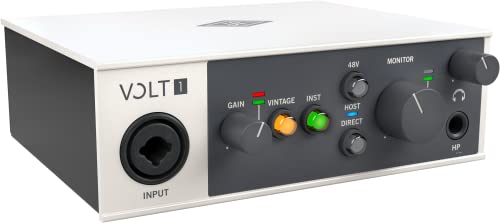
- 610-style Vintage preamp mode
- 24-bit/192kHz recording support
- Compatible with computers and selected mobile devices
Best For: Songwriters seeking classic preamp coloration
Modern Songwriter Pick
Focusrite Scarlett Solo 4th Gen

- 120dB dynamic range and 24-bit/192kHz audio
- Improved Air modes for vocals and guitars
- Includes recording software and creative plugins
Best For: Songwriters wanting an updated solo recording interface
Versatile Starter
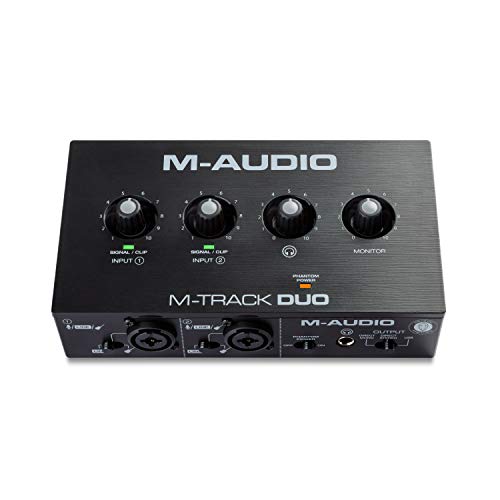
- Two combo mic, line, and instrument inputs
- Zero-latency USB/Direct monitoring switch
- Includes MPC Beats recording software
Best For: Two-source home recording, streaming, and podcasting
Feature-Rich Choice
Focusrite Scarlett 2i2 4th Gen

- 24-bit/192kHz recording with 120dB dynamic range
- Auto Gain and Clip Safe help prevent recording issues
- Air modes add presence to vocals and guitars
Best For: Higher-resolution music recording with guided level control
Compact Solo Setup
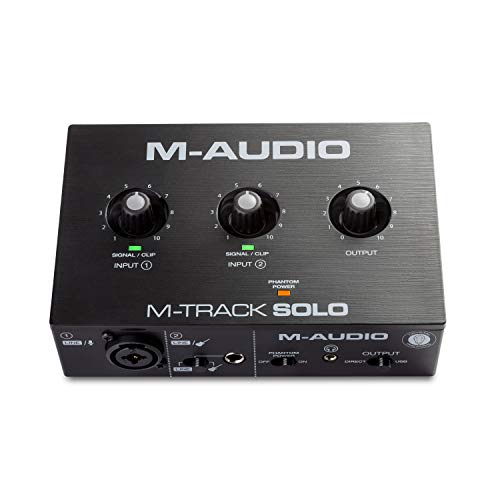
- Combo mic/line input plus line/instrument input
- USB/Direct switch enables zero-latency monitoring
- Lightweight design with MPC Beats included
Best For: Portable solo recording, streaming, and podcasting
Best All-Rounder
Focusrite Scarlett 4i4 4th Gen

- Two mic preamps and two Hi-Z inputs
- Air mode, Auto Gain, and Clip Safe
- MIDI I/O plus four-in/four-out connectivity
Best For: Expandable home studios recording guitar and vocals
Best for Fender Tones
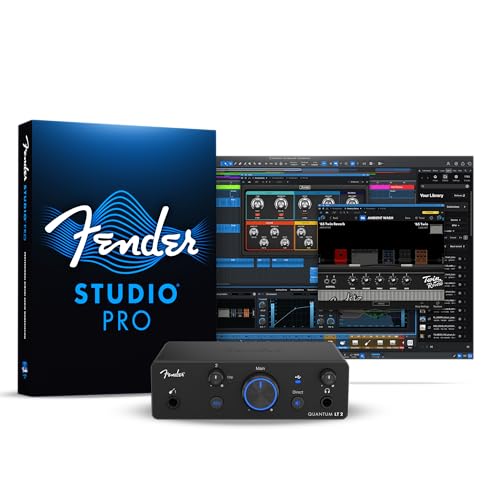
- Fender-voiced guitar and bass input
- 75dB MAX-HD microphone preamp
- Loopback, balanced outputs, and amp/FX software
Best For: Compact guitar-and-vocal recording with Fender tones
Best for Mobile Creators
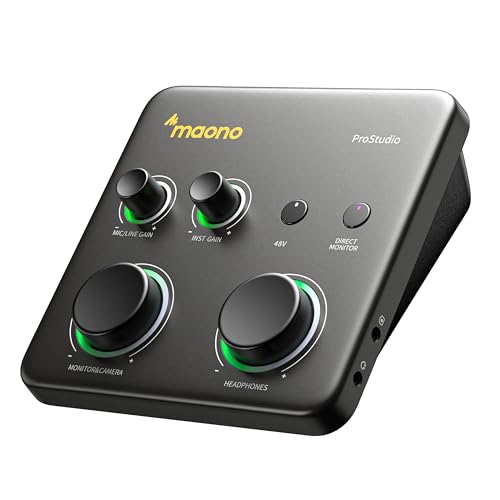
- Dual USB connects computer and mobile devices
- 70dB gain and 24-bit/192kHz recording
- Loopback, Auto-Gain, and direct monitoring
Best For: Portable guitar, vocal, and streaming workflows
Reliable Starter – Focusrite Scarlett Solo 3rd Gen
The Focusrite Scarlett Solo 3rd Gen is a practical audio interface for guitar and vocals, pairing a dedicated XLR mic preamp with a Hi-Z instrument input. Its Air mode, Gain Halos, and 24-bit/192kHz recording support make it well suited to home recording and songwriting.
Best For: Guitarists and vocalists who want a compact, established interface with useful bundled recording software.
Pros:
- Dedicated mic preamp and high-headroom instrument input
- Air mode can add clarity to acoustic instruments and vocals
- Supports recording and mixing up to 24-bit/192kHz
- Includes Pro Tools Intro+, Ableton Live Lite, Cubase LE, and Hitmaker Expansion
Cons:
- Provides only one XLR mic input and one instrument input
- The supplied details list a two-year warranty, while the product notes also reference three years; verify coverage before purchase
Choose this model if you want straightforward guitar-and-vocal recording with a familiar workflow and a useful software bundle. It is especially appealing for solo creators who do not need multiple microphone inputs.
Portable Value Pick – PIYONE Q2 Alloy Red
The PIYONE Q2 is a flexible audio interface for guitar and vocals with two combo inputs, USB-C bus power, and class-compliant plug-and-play operation for Mac and PC. It combines 24-bit/192kHz recording with direct monitoring and a compact, portable design.
Best For: Mobile and home creators who need two inputs, phantom power, and simple USB-C connectivity.
Pros:
- Two combo XLR/TRS inputs support microphones and guitar
- 48V phantom power accommodates condenser microphones
- Direct monitoring provides zero-latency tracking
- USB-C handles data and bus power without an external supply
Cons:
- The supplied operating-system details list Windows, so Mac or iOS compatibility should be confirmed
- It has a 3.5mm headphone connection rather than a stated high-power studio headphone output
With two inputs and a bus-powered design, the Q2 is a useful choice for recording guitar and vocals together. Its portability and illuminated controls add convenience, though buyers using Apple devices should check compatibility first.
Vintage-Tone Choice – Universal Audio Volt 1
The Universal Audio Volt 1 is an audio interface for guitar and vocals aimed at creators who want a more characterful recording option. Its Vintage mode is designed to evoke UA 610 preamp tone, while converters support up to 24-bit/192kHz recording.
Best For: Songwriters and home producers who value Vintage preamp coloration and access to a broad software ecosystem.
Pros:
- Vintage mode provides a 610-style preamp character
- Supports up to 24-bit/192kHz recording quality
- Works with Mac, Windows, iPad, and iPhone
- Includes access to LUNA, UAD plug-ins, instruments, tips, and tutorials
Cons:
- The supplied details do not specify separate input types or phantom-power capabilities
- Mobile use requires an external Volt power supply and, in some cases, an Apple Lightning to USB Camera Adapter
- Warranty coverage is listed as one year
The Volt 1 stands out when preamp character and UA’s recording software ecosystem matter as much as basic connectivity. It is a strong fit for a solo setup, but verify the included power requirements before planning mobile recording.
Modern Songwriter Pick – Focusrite Scarlett Solo 4th Gen
The Focusrite Scarlett Solo 4th Gen is a streamlined audio interface for guitar and vocals, with one XLR mic preamp and one Hi-Z instrument input. Its 120dB dynamic range and improved Air modes are designed to give vocals and guitars a clearer, more forward sound.
Best For: Songwriters who want a compact interface with updated conversion, vocal-and-guitar-focused tone shaping, and a long warranty.
Pros:
- 120dB dynamic range uses converters from Focusrite’s flagship range
- Improved Air modes add presence and harmonic drive to vocals and guitars
- Supports 24-bit/192kHz recording
- Includes Pro Tools Intro+, Ableton Live Lite, Cubase LE, and Hitmaker Expansion
Cons:
- Only one mic preamp and one instrument input are provided
- Its single-input layout is not designed for larger multi-microphone sessions
Compared with the earlier Solo, the 4th Gen model is the more current choice for creators prioritizing dynamic range and updated Air processing. It keeps the setup simple while offering enough flexibility for simultaneous guitar and vocal recording.
Versatile Starter – M-AUDIO M-Track Duo
The M-Audio M-Track Duo is a practical audio interface for guitar and vocals when you need two simultaneous inputs for home recording, streaming, podcasting, or live use. Its dual combo inputs accept microphones, guitar, or line-level sources, while phantom power supports compatible condenser microphones.
Best For: Guitarists and vocalists who need two inputs and flexible monitoring at an entry-level price.
Pros:
- Two combo XLR/line/instrument inputs with phantom power
- USB/Direct switch enables zero-latency monitoring
- Includes MPC Beats and supports 48kHz recording
Cons:
- Maximum sample rate is limited to 48kHz
- Only two input channels are available
Choose the M-Track Duo if you want straightforward guitar-and-vocal recording with two inputs, useful monitoring options, and bundled production software without a complicated setup.
Feature-Rich Choice – Focusrite Scarlett 2i2 4th Gen
The Focusrite Scarlett 2i2 4th Gen is a strong audio interface for guitar and vocals when recording quality and easy level control matter. It provides two microphone or Hi-Z instrument inputs, 24-bit/192kHz recording, Auto Gain, Clip Safe, and Air modes designed to add presence to vocals and guitars.
Best For: Musicians who want higher-resolution recording, assisted gain control, and built-in sound-shaping features.
Pros:
- Two mic preamps and two Hi-Z instrument inputs
- 120dB dynamic range with up to 192kHz sample rate
- Auto Gain, Clip Safe, and Air modes simplify recording
- Includes Pro Tools Intro+, Ableton Live Lite, Cubase LE, and Hitmaker Expansion
Cons:
- Software and features may be more than a basic setup requires
- Supplied cable is USB-A to USB-C, which may require an adapter for some devices
For guitar-and-vocal recording with room to refine your sound, the Scarlett 2i2 adds useful safeguards and tonal options while offering a notably higher stated recording specification than the other interfaces here.
Compact Solo Setup – M-AUDIO M-Track Solo
The M-Audio M-Track Solo is a compact audio interface for guitar and vocals built for simple recording, podcasting, and live streaming. Its combo microphone/line input and separate line/instrument input let you connect a vocal microphone and guitar or another source, while the USB/Direct switch supports zero-latency monitoring.
Best For: Solo musicians and creators who want a lightweight, space-saving interface with two input paths.
Pros:
- One combo XLR/line input plus a separate line/instrument input
- Phantom power supports compatible condenser microphones
- Lightweight design and 48kHz USB recording
- Includes MPC Beats software and RCA outputs
Cons:
- Maximum sample rate is limited to 48kHz
- Monitoring uses a 1/8-inch headphone output and RCA main outputs
The M-Track Solo makes sense when portability and simplicity come first. It offers the essential connections for a guitar-and-vocal setup while taking up less space than a larger desktop interface.
Best All-Rounder – Focusrite Scarlett 4i4 4th Gen
If you need an audio interface for guitar and vocals that can also grow with a more capable home studio, the Focusrite Scarlett 4i4 4th Gen offers flexible I/O, two Hi-Z instrument inputs, and two microphone preamps. Its Air mode, Auto Gain, and Clip Safe features are especially useful for recording confidently without constant level adjustments.
Best For: Guitarists and vocalists who want multiple inputs, MIDI connectivity, and room to expand their recording setup.
Pros:
- Two mic preamps and two Hi-Z inputs support simultaneous vocal and instrument recording.
- 120dB dynamic range and up to 24-bit/192kHz operation provide detailed recording capability.
- Air mode adds presence to vocals and guitars, while Auto Gain and Clip Safe help protect takes.
- Includes MIDI I/O, four line inputs, four line outputs, and a useful software bundle.
Cons:
- Its expanded connectivity may be more than a basic one-mic, one-guitar setup requires.
- USB-C power supply is included, so users should account for the interface’s power requirements.
The Scarlett 4i4 is a strong choice when flexibility matters as much as sound quality. It is particularly appealing for creators recording guitar and vocals today while planning to add synths, drum machines, or external MIDI gear later.
Best for Fender Tones – Fender Quantum LT2
The Fender Quantum LT2 is a compact audio interface for guitar and vocals designed around straightforward two-channel recording. It combines a Fender-voiced instrument input with a high-gain microphone preamp, low-latency drivers, and access to Fender amp and effects software for shaping guitar and bass tones.
Best For: Guitarists, vocalists, and producers who prefer a compact 2×2 interface with Fender-oriented amp and effects options.
Pros:
- Fender instrument input is voiced to keep guitar and bass tones full and dynamic.
- MAX-HD mic preamp provides up to 75dB of clean gain for microphones and vocals.
- Compact USB-C design includes balanced outputs, a high-power headphone amp, and loopback routing.
- Fender Studio app provides access to the Fender Amp & FX Pack after registration.
Cons:
- Two-channel I/O is less suitable for recording several microphones or instruments at once.
- The full Fender software experience depends on registration and app setup.
Choose the Quantum LT2 if your workflow centers on one guitar and one vocal source and you value Fender-style tone shaping. Its compact format and loopback features also make it practical for streaming and content creation.
Best for Mobile Creators – MAONO P1 USB Interface
The MAONO P1 is an audio interface for guitar and vocals aimed at creators who record and stream across computers, phones, tablets, and cameras. Dual USB connectivity, up to 70dB of gain, direct monitoring, and loopback routing make it suited to covers, tutorials, live content, and portable recording workflows.
Best For: Mobile musicians, streamers, and solo creators combining guitar or vocals with backing tracks and online content.
Pros:
- Dual USB ports can connect a computer and phone or iPad simultaneously.
- Up to 70dB of gain supports gain-hungry dynamic microphones without an external booster.
- 24-bit/192kHz recording, ASIO support, and direct monitoring support detailed, low-latency work.
- Auto-Gain, loopback, independent mute controls, and routing software simplify streaming setups.
Cons:
- Its creator-focused routing and streaming features may be unnecessary for a simple recording-only setup.
- Some software features require working with the supplied ProStudio2 workflow and compatible applications.
The P1 stands out for flexible connectivity and content-focused control rather than traditional studio expansion. It is a practical fit for musicians who move between mobile recording, streaming, and desktop production.
How We Picked the Best Audio Interface for Guitar and Vocals
We focused on the features that matter most when recording a microphone and guitar: preamp quality, usable gain, high-impedance instrument inputs, latency-conscious monitoring, and straightforward computer or mobile connectivity. We also considered whether each interface offers enough simultaneous inputs for common recording scenarios, such as tracking vocals and guitar together.
Value and usability were important as well. Included software, driver support, compact design, power requirements, and controls for headphone and monitor levels can make a major difference for beginners and experienced home recordists alike. The selection includes one- and two-input models, expandable options, and specialist-friendly choices for guitarists.
Quick Comparison
| Best For | Look For |
|---|---|
| Solo songwriting | One quality mic input, an instrument input, and direct monitoring |
| Simultaneous guitar and vocals | Two independent inputs with separate gain controls |
| Future expansion | Additional inputs, MIDI, or flexible routing |
| Mobile recording | USB-C or iOS compatibility and manageable power requirements |
| Guitar-focused setups | Hi-Z input, amp simulation support, and easy software integration |
Key Buying Factors for an Audio Interface for Guitar and Vocals
Inputs and Preamps
Choose at least two inputs if you want to record guitar and vocals at the same time. Combo XLR/TRS inputs accept microphones, balanced line sources, and many instrument connections. A dedicated Hi-Z input is especially useful for passive electric guitar pickups. Check the available gain range if you use a quiet dynamic microphone.
Monitoring and Latency
Direct monitoring routes the input signal to your headphones with little or no computer delay, which is valuable when singing or playing through software effects. Look for separate headphone and monitor controls, a mix knob when available, and a headphone output powerful enough for your headphones.
Resolution, Compatibility, and Power
24-bit recording is a sensible baseline for home production, while higher sample-rate support can help with specialized workflows. Confirm compatibility with your computer, tablet, or phone, and check whether mobile recording requires an adapter, powered hub, or separate power source.
Software and Expansion
Bundled recording software, amp modeling, effects, and virtual instruments can reduce startup costs. If you expect to add keyboards, drum machines, or external MIDI gear, consider an interface with MIDI or more inputs rather than replacing a basic model later.
Who Should Buy Which Audio Interface for Guitar and Vocals?
Choose a compact one-input interface if you mainly record one source at a time and want the smallest, simplest setup. These models suit solo vocalists, guitarists, podcasters, and mobile creators.
Choose a two-input interface if your typical session combines a microphone and guitar, uses stereo sources, or involves two performers. This is the most versatile starting point for many home studios.
Choose a larger interface if you plan to record several microphones, hardware instruments, or a small ensemble. Extra inputs and routing flexibility cost more but can prevent an early upgrade.
Choose a guitar-oriented package if amp simulations, effects, and instrument-focused software are central to your workflow. Before buying, verify the included software licenses, operating-system support, and whether the interface provides the input and monitoring controls you actually need.