
The best board games for children make family time more engaging while helping kids practice turn-taking, matching, counting, memory, and simple strategy. This roundup includes approachable classics for preschoolers and more competitive choices for children ages six and up.
Use the age guidance, player counts, play styles, and cleanup needs below to find a game that fits your child and your household.
Best 10 Board Games for Children Picks for 2026
Best Classic Starter
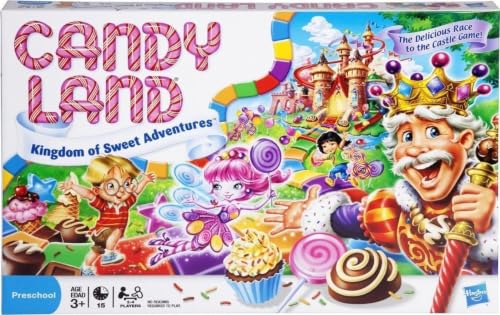
- No-reading gameplay for ages 3 and up
- Color-based movement and sweet illustrations
- Supports turns, colors, and sportsmanship
Best For: Preschoolers starting board games
Best Variety Pick

- Six games for 2 to 6 players
- Large, colorful cards for young players
- Portable tin suits travel and visits
Best For: Families seeking flexible, on-the-go play
Best Two-Player Strategy

- Head-to-head play for ages 6 and up
- Blocking creates simple strategic choices
- Includes blue Blocker Discs
Best For: Two-player family game sessions
Best Active Dexterity Game

- Action game for ages 4 and up
- Rotating pond with 21 colorful fish
- Builds hand-eye and fine-motor skills
Best For: Hands-on play for young children
Classic Strategy Pick
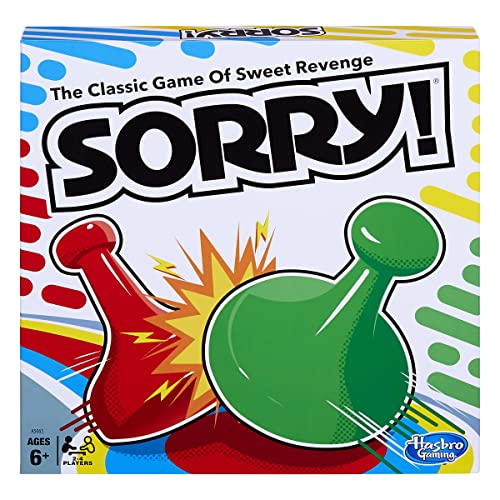
- Card-driven racing gameplay
- For 2–4 players ages 6+
- Includes 12 pawns and 45 cards
Best For: Family game nights with school-age children
Preschool Action Favorite

- Fast marble-chomping gameplay
- For 2–4 players ages 4+
- Includes storage case for marbles
Best For: Preschool playdates and energetic family games
Easy Family Classic
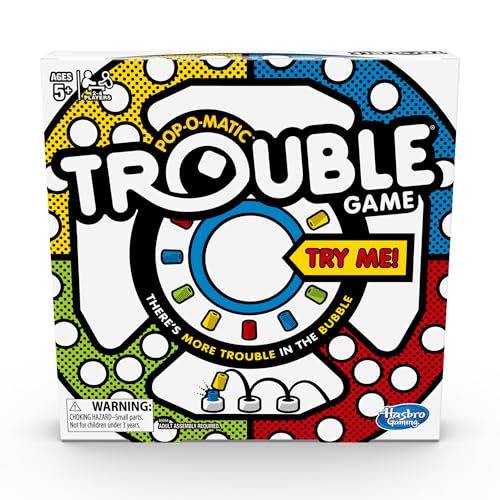
- Pop-O-Matic die roller
- For 2–4 players ages 5+
- Includes optional Power Up Spaces
Best For: Quick family games and playdates
Classic Counting Pick

- No reading required
- Practices counting and number recognition
- For 2 to 4 players ages 3+
Best For: Preschoolers and first-time board gamers
Fruit-Picking Math Game
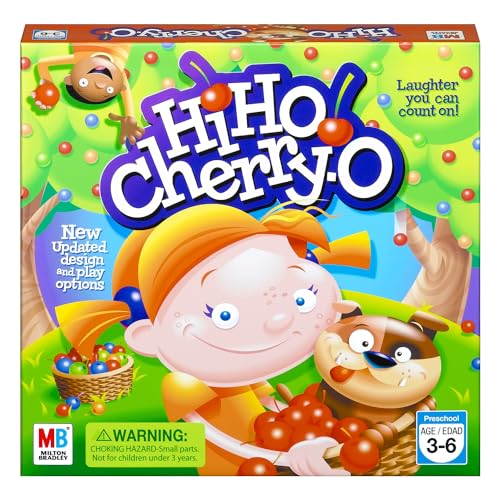
- Practices counting and basic math
- Simple gameplay for ages 3+
- About 15 minutes per game
Best For: Preschool math practice and classroom play
Fine-Motor Challenge

- Builds hand-eye coordination
- Supports solo or group play
- Electronic buzzer and flashing nose
Best For: Hands-on play for children ages 6 and up
Best Classic Starter – Candy Land
Candy Land is a straightforward choice for families looking for board games for children ages 3 and up. Players use colored cards to move gingerbread-man pawns along a sweet-themed path toward the castle, with no reading required.
Best For: Preschoolers learning colors, turn-taking, and basic game etiquette.
Pros:
- No reading is required, making it accessible to early players.
- Colorful cards, illustrations, and themed destinations appeal to young children.
- Supports color recognition, taking turns, and sportsmanship.
- Plays in about 15 minutes for a manageable introduction to tabletop games.
Cons:
- Its card-based movement offers limited strategic decision-making.
- The recommended age range is focused on younger children, from 3 to 6 years.
Candy Land works well as a gentle first board game, especially when simplicity and a short playtime matter more than strategy.
Best Variety Pick – Classic Card Games Set
This six-deck collection gives families a flexible alternative to traditional board games for children. It includes Old Maid, Go Fish, Slap Jack, Crazy 8’s, War, and Silly Monster Memory Match for 2 to 6 players.
Best For: Families wanting portable games with simple rules and several ways to play.
Pros:
- Includes six different classic-style card games in one set.
- Extra-large cards are designed for little hands.
- Bright colors and simple symbols support accessible play.
- Can reinforce colors, numbers, reading, memory, and matching skills.
Cons:
- The included games may vary according to the product notes.
- Some games, such as Slap Jack, may be more active than quiet matching games.
With six options in a compact package, this set is practical for road trips, sleepovers, camping, or family game time at home.
Best Two-Player Strategy – Connect 4
Hasbro Gaming Connect 4 Strategy Board Game for Ages 6 and Up (Amazon Exclusive)
Check Price On AmazonConnect 4 is a focused two-player option among board games for children ages 6 and up. Players drop colored discs into the grid, block an opponent’s line, and can use the included blue Blocker Discs to introduce additional strategies.
Best For: Two children or a child and adult who enjoy quick, competitive strategy games.
Pros:
- Designed specifically for two players.
- Simple blocking and disc-placement rules are easy to understand.
- Blue Blocker Discs add extra strategic possibilities.
- No batteries are required.
Cons:
- It is not suited to groups larger than two players.
- Small parts present a choking hazard and require age-appropriate supervision.
- Its estimated playtime is longer than some preschool games, at about 30 minutes.
Choose Connect 4 when you want a reusable head-to-head game that combines accessible rules with more decision-making than a basic luck-based game.
Best Active Dexterity Game – Let's Go Fishin'
Let's Go Fishin' Game by Pressman - The Original Fast-Action Fishing Game!, 1-4 players
Check Price On AmazonLet’s Go Fishin’ adds movement and hand-eye coordination to the board-game shelf. For 1 to 4 players ages 4 and up, children use mini fishing poles to catch colorful fish from a rotating pond as the fish open and close their mouths.
Best For: Young children who prefer hands-on, action-based games over turn-based strategy.
Pros:
- Supports hand-eye coordination and fine motor skills.
- Allows solo play as well as games for up to four players.
- Includes 21 colorful fish, four fishing poles, and a plastic game base.
- The rotating pond and moving fish create an engaging action element.
Cons:
- Requires batteries according to the product details.
- Small parts and magnets call for attention to the listed safety warnings.
- Its action-focused format provides less traditional board-game strategy.
This is a strong pick for children who enjoy physical interaction and quick turns, particularly when fine-motor practice is part of the goal.
Classic Strategy Pick – Sorry! Board Game
For families seeking board games for children ages 6 and up, Sorry! offers familiar racing gameplay with simple rules and plenty of player interaction. Children move pawns by card, race toward home, and can send opponents back to the start.
Best For: Family game nights with children who enjoy competitive racing and strategy.
Pros:
- Supports 2–4 players and encourages family participation.
- Combines straightforward racing with card-based strategy.
- Features classic gameplay suitable for introducing a new generation to Sorry!
- Includes the gameboard, 12 pawns, 45 cards, and instructions.
Cons:
- Small parts may not be suitable for younger children.
- Gameplay can send a player’s pawn back to the starting point, which may frustrate some children.
Sorry! is a strong choice when you want an indoor family game that balances easy-to-follow rules with changing card-driven decisions. Its recommended age starts at 6, making it better suited to early school-age children than preschoolers.
Preschool Action Favorite – Hungry Hungry Hippos
Hungry Hungry Hippos is a lively option among board games for children ages 4 and up. Players choose a hippo, launch marbles into the center, and press their lever to gobble as many as possible in quick, repeatable rounds.
Best For: Preschoolers who enjoy fast, hands-on games with simple competitive play.
Pros:
- Easy to learn and designed for 2–4 players.
- Instant marble reload keeps rounds moving.
- Marble storage case helps contain pieces during storage or transport.
- Quick setup works well for playdates and family game time.
Cons:
- Includes small balls and parts, so supervision is important around younger children.
- Real-time gameplay may feel hectic for children who prefer slower games.
This game stands out for preschool families that value immediate action over complex rules. Its storage features and fast replayability also make it practical for repeated indoor play.
Easy Family Classic – Trouble Board Game
For families comparing board games for children ages 5 and up, Trouble provides an easy-to-learn race around the board with a distinctive Pop-O-Matic die roller. Players move their pieces and try to get them all around the board first.
Best For: Family game nights and playdates where children want quick setup and familiar rules.
Pros:
- Simple objective and quick setup make it accessible to young players.
- Pop-O-Matic roller keeps the die contained and adds tactile fun.
- Offers classic rules plus optional Power Up Spaces.
- Supports 2–4 players with an estimated 30-minute playing time.
Cons:
- Recommended for ages 5 and up, so it may not suit preschoolers.
- Plastic pieces and the game unit include small parts.
Trouble is a practical pick when you want a traditional family game that children can learn quickly. The optional Power Up Spaces add variety once players are comfortable with the classic version.
Classic Counting Pick – Chutes and Ladders
Chutes and Ladders is a straightforward choice for families looking for board games for children ages 3 and up. With no reading required, players spin, move, and race to the top while practicing counting and number recognition.
Best For: Preschoolers, first-time board gamers, and family play with 2 to 4 players.
Pros:
- No reading required, making it accessible to young players.
- Simple spin-and-move gameplay is easy to learn.
- Encourages counting and number recognition.
- Supports up to four players.
Cons:
- Gameplay relies heavily on luck and rolling movement.
- Small parts may present a choking hazard.
Choose this classic if you want an uncomplicated introduction to board games for children. Its preschool-friendly rules make it easy to bring out repeatedly, though older children may prefer a more strategic challenge.
Fruit-Picking Math Game – Hi Ho! Cherry-O
Hasbro Gaming Hi Ho Cherry-O Board Game for 2 to 4 Players Kids Ages 3 and Up (Amazon Exclusive)
Check Price On AmazonHi Ho! Cherry-O offers a colorful, hands-on option for board games for children ages 3 and up. Players pick pretend fruit, fill their baskets, and use the spinner while practicing counting, addition, and subtraction.
Best For: Preschool math practice, family play, and classroom activities for up to four players.
Pros:
- Simple rules are suitable for preschoolers.
- Builds counting, addition, and subtraction skills.
- Includes cherries, blueberries, apples, and oranges for tactile play.
- Typical play time is about 15 minutes.
Cons:
- Spinner-based play is primarily luck-driven.
- Small fruit pieces may present a choking hazard.
This is a practical pick when you want early math practice to feel like play. The short sessions and familiar fruit theme work well for young children, although experienced players may find the mechanics limited.
Fine-Motor Challenge – Operation
Operation is a more skill-focused choice among board games for children, recommended for ages 6 and up. Players use tweezers to remove Funatomy parts without touching the sides, triggering the buzzer and Cavity Sam’s illuminated red nose.
Best For: Children who enjoy hands-on challenges, solo play, or family games that build coordination.
Pros:
- Develops fine motor skills and hand-eye coordination.
- Can be played alone or with friends.
- Funny buzzer and flashing nose add suspense.
- Includes 26 cards, 12 parts, tweezers, and play money.
Cons:
- Requires 2 AA batteries.
- Small game parts may require careful supervision.
- The tweezers challenge may frustrate younger players.
Operation stands out when you want an interactive game rather than a simple race to the finish. Its coordination-based play is engaging for children who meet the age recommendation, and the solo option adds flexibility.
How We Picked the Best Board Games for Children
We selected games across several age ranges, from simple preschool activities to more involved games for elementary-age children. We considered recommended age, number of players, setup time, gameplay length, skill level, replay value, and how easily adults can explain the rules. The list also includes a mix of luck-based games, classic card games, dexterity challenges, and beginner strategy options.
Because children develop at different rates, age labels are useful starting points rather than strict rules. Consider whether your child can follow turn order, handle small game pieces safely, and stay engaged for the expected playing time.
Quick Comparison
| Best For | Recommended Picks | Typical Age |
|---|---|---|
| Preschool beginners | Candy Land, Chutes and Ladders, Hi Ho Cherry-O | 3+ |
| Fast action | Hungry Hungry Hippos, Let’s Go Fishin’ | 4+ |
| Simple card play | Regal Games Classic Card Games | Varies |
| Beginner strategy | Connect 4, Sorry!, Trouble | 5–6+ |
| Solo or family play | Operation | 6+ |
Key Buying Factors for Board Games for Children
Age and Developmental Level
Choose a game your child can understand without constant adult intervention. Preschool games typically emphasize color recognition, counting, matching, or simple motor skills. Older children may be ready for planning, decision-making, and rules involving multiple steps.
Player Count and Family Fit
Check whether the game works well with two players or requires a larger group. A game that supports solo play can be useful, while four-player options are better for siblings or family game nights.
Luck Versus Strategy
Random movement helps younger children participate without needing advanced skills. Strategy games offer more meaningful choices and can remain engaging as children improve. A balanced collection often includes both types.
Setup, Storage, and Durability
For frequent use, prioritize games with quick setup, sturdy components, and contained storage. Electronic or action-based games may be exciting but can require batteries, extra cleanup, or closer supervision.
Who Should Buy Which Board Games for Children?
For a first board game, choose Candy Land, Chutes and Ladders, or Hi Ho Cherry-O. Families seeking energetic, short rounds may prefer Hungry Hungry Hippos or Let’s Go Fishin’. Connect 4, Sorry!, and Trouble are stronger choices for children ready to think ahead while still enjoying straightforward rules. The Regal Games card set offers variety at a low commitment, and Operation is a good fit for children who enjoy dexterity challenges or want a game that can accommodate solo play.
Whichever option you choose, look for games that match your child’s attention span and interests. The best Board Games for Children are the ones they can start confidently and will want to play again.
