
Choosing a capture card for 4K 120Hz passthrough means balancing high-refresh gameplay, capture resolution, HDR support, latency, and reliable connectivity. The right model lets you play at the quality your display supports while recording or streaming through your PC.
We selected ten options spanning HDMI 2.1 USB devices, internal PCIe cards, and more affordable passthrough-focused models. Use the guide below to match features and compatibility with your console, gaming PC, and content workflow.
Best 10 Capture Card for 4K 120hz Passthrough Picks for 2026
Best Overall

- 4K144 capture and passthrough
- HDMI 2.1 with VRR and HDR10
- Up to 1080p240 capture
Best For: Flexible high-refresh gaming and streaming setups
Best 4K120 Loopout

- 4K120 HDR HDMI loopout
- 4K60 USB-C capture
- VRR, HDR, and headset audio support
Best For: 4K120 gameplay with 4K60 streaming capture
Best Audio Flexibility
4K144 HDMI 2.1 USB Capture Card

- Up to 4K144 HDR10 and VRR passthrough
- Multiple microphone and audio outputs
- Plug-and-play OBS compatibility
Best For: High-refresh streaming with detailed audio routing
Best Internal Card

- 8K60 HDMI 2.1 passthrough
- 4K60 HDR10 capture
- VRR and 1080p240 recording
Best For: Windows desktop dual-PC streaming setups
Premium HDMI 2.1 Pick

- Up to 4K144 HDR/VRR passthrough
- Up to 4K144 Windows capture
- Party chat and 5.1 audio support
Best For: High-refresh HDMI 2.1 gaming setups
Simple 4K Recording Pick

- Captures up to 4K60
- Supports 1440p120 and 1080p240 passthrough
- HDR10 and analog audio input
Best For: Straightforward console and PC recording
Value VRR Pick

- 4K60 HDR passthrough
- 4K30 capture with VRR support
- Plug-and-play with 3.5mm audio I/O
Best For: Simple VRR streaming setups
Flexible 4K Capture

- 4K 60Hz capture
- 2K 144Hz and 1080p 240Hz passthrough
- VRR, HDR, and multi-OS support
Best For: High-refresh 1440p and 1080p gaming
HDR Control Hub
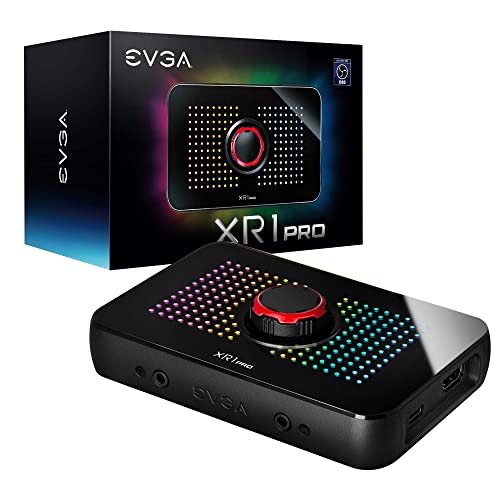
- 4K 60Hz HDR passthrough
- 1440p 144Hz HDR passthrough
- Built-in mixer and control dial
Best For: Windows OBS streaming with hands-on audio control
Console Streaming Pick

- 4K HDR 60Hz passthrough
- 1080p 120fps capture
- USB 3.2 plug-and-play with OBS certification
Best For: Simple Windows console streaming and recording
Best Overall – Elgato 4K X
The Elgato 4K X is a strong all-around capture card for 4K 120Hz passthrough setups. Its HDMI 2.1 connections support high-refresh gameplay, while USB 3.2 Gen 2 helps maintain low-latency capture for streaming and recording.
Best For: Gamers who want versatile HDMI 2.1 passthrough, VRR support, and broad software compatibility.
Pros:
- Supports 4K144 capture and passthrough.
- HDMI 2.1, HDR10, and VRR passthrough support.
- Captures up to 1080p240 and works with OBS and other popular apps.
- Compatible with PCs, Macs, PS5, Xbox Series X, and Nintendo Switch.
Cons:
- Requires a USB 3.2 Gen 2 port for its highest capture performance.
- Its listed video capture resolution may be presented as 1080p in the specifications.
Choose the 4K X when you want a flexible external solution that prioritizes high-refresh passthrough, VRR, and low-latency operation across multiple platforms.
Best 4K120 Loopout – SIIG HDMI 2.1 Capture Device
The SIIG HDMI 2.1 Capture Device is designed for a 4K 120Hz passthrough workflow where maintaining high-refresh gameplay is more important than matching that resolution in the stream. It supports 4K120 HDR on HDMI out while capturing up to 4K60 over USB-C.
Best For: Console and PC gamers who want 4K120 HDR gameplay with 4K60 capture.
Pros:
- Preserves 4K120 HDR through HDMI loopout.
- Captures up to 4K60 over USB-C.
- Supports VRR, HDR, and TAA for high-refresh setups.
- Includes a 3.5mm headset connection for game and chat volume control.
Cons:
- USB capture is limited to 4K60 rather than 4K120.
- SDR capture modes apply to several listed high-refresh configurations.
This is a practical choice when your priority is smooth 4K120 HDR play on the display while sending a dependable 4K60 feed to streaming software such as OBS.
Best Audio Flexibility – 4K144 HDMI 2.1 USB Capture Card
This 4K144 HDMI 2.1 USB capture card combines 4K 120Hz passthrough capability with extensive audio connections. It is aimed at streamers and creators who need high-refresh video plus microphone, line-level, headphone, and speaker routing.
Best For: Streamers, esports users, and dual-PC creators who need flexible audio control.
Pros:
- Supports passthrough up to 4K144 with HDR10 and VRR.
- On Windows, supports capture formats up to 4K144 depending on format.
- Includes HDMI audio, mic in, line in, line out, and speaker out.
- Plug-and-play UVC/UAC support works with OBS and Streamlabs.
Cons:
- Mac capture support is listed up to 4K60.
- Maximum capture frame rate depends on the selected format and operating system.
- Some compatible devices require suitable HDMI output or adapters.
Its strongest advantage is flexibility: it can preserve high-refresh gameplay while giving streamers more ways to mix, monitor, and route audio than a basic capture device.
Best Internal Card – Elgato 4K Pro
The Elgato 4K Pro is an internal PCIe capture card for desktop users who want exceptionally high-resolution passthrough. It supports 8K60 passthrough, 4K60 HDR10 capture, HDMI 2.1, and VRR for a powerful dual-PC streaming setup.
Best For: Windows desktop users building a PCIe-based dual-PC streaming or recording system.
Pros:
- Offers 8K60 passthrough for compatible HDMI 2.1 sources.
- Captures 4K60 with HDR10.
- Supports VRR and up to 1080p240 recording.
- Designed for ultra-low-latency dual-PC workflows.
Cons:
- Requires a Windows 10 PC with an available PCIe slot.
- It is an internal card, so it is less portable than USB capture devices.
- The listed capture capability is 4K60 rather than 4K120.
For a permanent desktop setup, the 4K Pro is compelling when high-resolution passthrough and stable PCIe connectivity matter more than portability or 4K120 capture.
Premium HDMI 2.1 Pick – Live Gamer Ultra 2.1
If you need a capture card for 4K 120Hz passthrough, the AVerMedia Live Gamer Ultra 2.1 is the most capable option here. Its HDMI 2.1 passthrough supports up to 4K144 HDR and VRR, while Windows users can capture up to 4K144 MJPEG with the AVerMedia Streaming Center.
Best For: PC and current-generation console gamers using high-refresh HDMI 2.1 displays.
Pros:
- Supports up to 4K144 HDR/VRR passthrough, plus 1440p240 and 1080p360.
- Windows capture reaches 4K144 MJPEG; macOS supports capture up to 4K60.
- Includes party-chat connectivity, 5.1-channel audio support, and RGB lighting.
- Works with Windows, Mac, and iPad over USB-C.
Cons:
- 4K capture at the listed high frame rate depends on a supported Windows PC.
- Monitors using DSC may limit 4K passthrough to 4K120.
- Its advanced features may be more than needed for basic 4K60 recording.
Choose this model when preserving high-refresh gameplay matters as much as recording quality. It is particularly well matched with HDMI 2.1 consoles, gaming PCs, HDR displays, and VRR setups.
Simple 4K Recording Pick – Elgato 4K S
The Elgato 4K S is a practical capture card for 4K 120Hz passthrough if you want high-frame-rate gameplay while recording at 4K60. It also supports 1440p120 or 1080p240 passthrough and connects through USB-C for use with compatible Windows, Mac, and iPad systems.
Best For: Console and PC players who want straightforward 4K60 capture with high-frame-rate passthrough.
Pros:
- Captures gameplay at up to 4K60.
- Supports 1440p120 and 1080p240 passthrough for high-refresh gaming.
- Provides HDR10 support with tone mapping on Windows.
- Includes a 3.5mm analog audio input for game chat or commentary.
Cons:
- The supplied specifications list video capture resolution as 1080p despite the 4K60 capture claim.
- Windows support requires Windows 11, while Mac support starts at macOS 13.
- It does not offer the higher 4K144 capture capability of the AVerMedia HDMI 2.1 model.
This is a sensible middle ground for creators who prioritize 4K60 recording and broad device compatibility over the highest possible capture frame rates. Its analog audio input is useful for adding commentary or capturing in-game chat.
Value VRR Pick – Live Gamer Extreme 3
For shoppers seeking a capture card for 4K 120Hz passthrough on a tighter feature set, the AVerMedia Live Gamer Extreme 3 offers 4K60 HDR passthrough and VRR at 1440p120 or 1080p120. It captures 4K gameplay at 30 fps and connects without external power or extra drivers.
Best For: Streamers who want plug-and-play 4K30 capture with VRR passthrough.
Pros:
- Passes through 4K60 HDR and supports VRR at 1440p120 or 1080p120.
- Captures 4K gameplay at 30 fps for streaming and recording.
- Plug-and-play design works with OBS, Twitch, Windows, Mac, and iPadOS.
- Provides 3.5mm audio input and output for headsets, game chat, and commentary.
Cons:
- It does not provide 4K120 passthrough; 4K passthrough is listed at 60Hz.
- 4K capture is limited to 30 fps.
- VRR support is limited to 1440p120 or 1080p120.
This model fits users who can accept 4K60 passthrough and 4K30 recording in exchange for easy setup and broad platform support. It is less suitable for a true 4K120 display chain, but its VRR support and audio connections make it useful for everyday streaming.
Flexible 4K Capture – PORTTA DX20R
The PORTTA DX20R is a versatile capture card for 4K 120Hz passthrough setups that also need high-refresh alternatives, supporting passthrough up to 2K at 144Hz and 1080p at 240Hz while capturing 4K at 60Hz. VRR, HDR, USB 3.0 connectivity, and broad operating-system support make it a practical option for console and PC streaming.
Best For: Gamers who want 4K capture with high-refresh 2K or 1080p passthrough.
Pros:
- Captures video at up to 4K 60Hz.
- Supports 2K 144Hz and 1080p 240Hz passthrough.
- Includes VRR, HDR, ultra-low latency, and plug-and-play support for Windows, macOS, and Linux.
- Utility software provides audio, firmware, EDID, and VRR controls.
Cons:
- Does not list 4K 120Hz passthrough support.
- Advanced configuration features require the optional CapHub utility.
The DX20R is a strong choice when 4K60 capture matters more than 4K120 passthrough. Its high-refresh 1440p and 1080p modes, plus VRR and HDR support, give it flexibility for competitive gaming displays.
HDR Control Hub – EVGA XR1 Pro
The EVGA XR1 Pro is a practical capture card for 4K 120Hz passthrough buyers who can work with its listed 4K 60Hz HDR passthrough limit. It captures up to 1440p at 60fps or 4K at 30fps and adds a built-in audio mixer, control dial, and customizable ARGB lighting.
Best For: OBS users who prioritize HDR passthrough and convenient audio controls.
Pros:
- Supports 4K 60Hz HDR passthrough.
- Offers 1440p 144Hz HDR passthrough.
- Includes a built-in audio mixer and physical control dial.
- Plug-and-play setup and OBS certification simplify streaming.
Cons:
- Does not list 4K 120Hz passthrough support.
- Capture is limited to 4K at 30fps or 1440p at 60fps.
- The supplied platform details specify Windows support.
The XR1 Pro is better suited to HDR-focused setups than true 4K120 workflows. Its 1440p 144Hz passthrough, mixer, and control dial make it appealing for streamers who value hands-on control.
Console Streaming Pick – ASUS TUF CU4K30
The ASUS TUF Gaming Capture Card CU4K30 is a solid console-oriented option for shoppers comparing a capture card for 4K 120Hz passthrough, although its listed passthrough specification reaches 4K HDR at 60Hz. It captures up to 4K at 30fps, supports 2K at 60fps and 1080p at 120fps, and connects through USB 3.2 Type-C.
Best For: PS5, Xbox, and Switch users who want simple OBS-compatible capture and HDR passthrough.
Pros:
- Supports 4K HDR 60Hz passthrough.
- Captures 4K at 30fps, 2K at 60fps, and 1080p at 120fps.
- Offers near-zero-latency operation, USB 3.2 plug-and-play UVC, and OBS certification.
- Controller and headset connections can pass team communications to the audience.
Cons:
- Does not list 4K 120Hz passthrough support.
- 4K capture is limited to 30fps.
- The supplied operating-system detail specifies Windows.
The CU4K30 is a straightforward choice for console streaming when 4K60 HDR passthrough is sufficient. Its durable alloy shell, audio connections, and driver-free setup add convenience for everyday recording and livestreaming.
How We Picked the Best Capture Card for 4K 120hz Passthrough
We compared these capture cards by their passthrough specifications, maximum capture resolution and frame rate, connection standard, HDR and variable-refresh support, compatibility with current consoles and PCs, and ease of use with software such as OBS. We also considered whether each model is better suited to competitive gaming, high-quality recording, live streaming, or a permanent desktop setup.
Specifications can vary by input, output, USB bandwidth, display, and software settings. Before buying, confirm that your graphics card, console, monitor, cables, and computer support the desired 4K 120Hz or 4K 144Hz signal path.
Quick Comparison
| Type | Best For | What to Check |
|---|---|---|
| HDMI 2.1 USB capture card | PS5, Xbox Series X, and modern gaming PCs | 4K 120Hz or 144Hz passthrough, USB 3.x bandwidth, HDR |
| Internal PCIe capture card | Dedicated streaming desktops | Available PCIe slot, system compatibility, cooling, and cabling |
| HDMI 2.0 or lower-cost model | 1080p high-refresh or 4K recording workflows | Whether 4K 120Hz is passthrough-only and not capture |
Key Buying Factors for a Capture Card for 4K 120hz Passthrough
HDMI Standard and Refresh Support
For genuine 4K 120Hz passthrough, prioritize HDMI 2.1 on the input and output. Some devices advertise high-refresh passthrough only at 1080p or 1440p, so read the resolution table carefully. A 4K 144Hz specification can provide useful headroom for PC gaming, while console users should verify support for 4K at 120Hz.
Capture Resolution Versus Passthrough
Passthrough preserves the signal sent to your gaming display; capture is the video sent to your computer. A card may pass through 4K 120Hz while capturing at 4K 60Hz, 1440p, or 1080p. That is often sufficient for streaming, but buyers seeking 4K 120fps recording need a model explicitly rated for it, plus a computer and storage system that can handle the data.
HDR, VRR, and Latency
HDR support matters for compatible displays and games, while VRR or variable-refresh support can help prevent tearing during gameplay. Look for clear claims about HDR formats, adaptive sync, and near-zero-latency monitoring. A capture preview should not replace the direct passthrough connection when timing is critical.
USB, PCIe, and Software Compatibility
USB 3.x devices are easier to move between systems, but they require an appropriate port and cable. Internal PCIe cards can offer a tidy, dedicated setup but need an open slot and desktop installation. Confirm support for OBS and your operating system, and check whether consoles require HDCP to be disabled for gameplay capture.
Who Should Buy Which Capture Card for 4K 120hz Passthrough?
- Console players: Choose an HDMI 2.1 model with verified 4K 120Hz passthrough, HDR support, and simple USB connectivity.
- Competitive gamers: Prioritize reliable high-refresh passthrough, VRR compatibility, and a direct connection to the gaming display.
- 4K streamers: Look for 4K 60 capture, strong HDR handling, stable USB or PCIe bandwidth, and certified OBS compatibility.
- PC creators: An internal PCIe card may be best for a permanent dual-PC or high-performance streaming workstation.
- Budget buyers: A lower-cost card can work well if you only need 1080p or 1440p high-refresh passthrough; do not assume it supports 4K 120Hz from the product name alone.