
Finding the best DI boxes for beginners can be confusing when you are still learning how guitars, basses, mixers, and audio interfaces work together. The right direct box makes connections simpler, helps manage impedance, and can reduce unwanted hum.
This roundup brings together beginner-oriented audio gear alongside several products labeled as “beginner boxes” in other categories. Use the buying guide below to identify which option fits your actual setup, then check the individual product details for specifications, compatibility, and current pricing.
Best 10 Di Boxes for Beginners Picks for 2026
Budget Signal Cleaner

- Passive DI for guitars, basses, and keyboards
- Ground lift and hum cancellation
- Steel chassis with pedal power support
Best For: Beginners building a simple live or recording setup
Tabletop Adventure Starter

- Rules for players and Game Masters
- Introductory adventure and campaign guidance
- Dice, map, cards, sheets, and pawns included
Best For: New tabletop roleplaying groups
Portable Performance Prop

- Portable prop for beginner magic practice
- Supports visual transformation effects
- Designed for events and family performances
Best For: Beginning magicians aged 12 and up
Fretboard Theory Guide

- Focuses on notes, intervals, and chord tones
- Introduces pentatonic playing later
- Written for developing, not brand-new, guitarists
Best For: Guitarists ready to understand the fretboard
Best Adjustable Plyo Box for Beginners

- Three height options per size
- Non-slip surface for stable jumps
- 450-pound weight capacity
Best For: Beginners progressing through home-gym plyometric exercises
Best Guided Card Game for Beginners

- Step-by-step two-player tutorial
- Eight themed half-decks to combine
- Playboards and counters included
Best For: Two new players learning Magic with Avatar-themed decks
Best Compact 3-in-1 Plyo Box for Beginners

- Rotates to three training heights
- Textured non-slip training surface
- Built-in handles for repositioning
Best For: Beginners building progressive home-gym conditioning workouts
Best Marvel-Themed Starter
Marvel Super Heroes Beginner Box
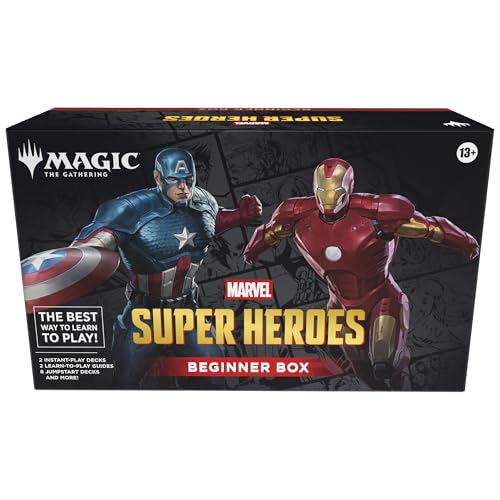
- Guided two-player tutorial games
- Eight mix-and-match half-decks
- Includes playboards and life counters
Best For: New Magic players and Marvel fans
Best Soft-Foam Plyo Box

- Three heights from 16 to 24 inches
- Soft high-density foam construction
- Portable 10-pound design
Best For: Beginner home workouts and step-ups
Best Stable Cotton Box
VEVOR 3-in-1 Plyometric Jump Box

- Three height settings for progression
- Recycled-cotton fill adds stability
- No assembly and wipe-clean cover
Best For: Beginner home-gym conditioning and step-ups
Budget Signal Cleaner – Pyle PDC21 Passive DI Box
For beginners comparing DI boxes for beginners, the Pyle PDC21 is a straightforward passive option for connecting guitars, basses, keyboards, and other unbalanced sources to balanced XLR equipment. Its ground-lift and hum-cancellation features can help create a cleaner connection in live or recording setups.
Best For: New musicians and home recording users who need a versatile passive DI box for instruments, keyboards, or consumer audio equipment.
Pros:
- Connects 1/4-inch instrument and line-level sources to balanced or unbalanced XLR equipment.
- Ground-lift and hum-cancellation features help address buzz and unwanted noise.
- Steel chassis is designed for regular use and can power up to 10 effects pedals.
Cons:
- Passive design may offer fewer controls than an active DI box.
- The compact unit is focused on basic connectivity rather than advanced routing.
The Pyle PDC21 makes a practical starter choice when simple connections and hum reduction matter more than extensive features. It is especially useful for building a first live or recording signal chain.
Tabletop Adventure Starter – Pathfinder Beginner Box
Although it is not an audio direct box, the Pathfinder Beginner Box is a complete entry point for newcomers searching broadly for beginner boxes. It combines rules, an introductory adventure, dice, maps, character sheets, and pawns so a group can start playing without assembling a separate set of materials.
Best For: New tabletop roleplaying players, families, or groups wanting a guided introduction to Pathfinder Second Edition.
Pros:
- Includes separate player and Game Master handbooks covering character creation and adventure-building basics.
- Provides premade and blank character sheets for immediate play or custom characters.
- Includes polyhedral dice, a full-color map, reference cards, and more than 100 pawns.
Cons:
- It is a tabletop roleplaying product, not an audio DI box.
- The substantial 176-page set may be more material than casual players need.
For the right audience, this deluxe box provides unusually complete beginner support in one package. However, shoppers specifically seeking audio DI boxes should treat it as unrelated to that use case.
Portable Performance Prop – Close Up Magic Box
This close-up magic box is another non-audio option among beginner boxes, designed for learners who want a portable performance prop. Its internal mechanism supports visual transformations, while the lightweight format makes it suitable for parties, family gatherings, school activities, and casual shows.
Best For: Beginners aged 12 and up who want to practice interactive magic and perform simple visual effects at events or gatherings.
Pros:
- Designed for portable use at parties, events, travel, and performances.
- Supports visual effects involving transformations such as producing scarves or candy.
- Modular parts are intended to support repeated use and skill development.
Cons:
- It is a magic prop, not an audio DI box.
- Material is listed as paper, which may not suit users seeking a rugged stage accessory.
- Instructions and included components are not fully detailed in the supplied listing.
This product can be a fun beginner-friendly introduction to interactive magic, particularly for social performances. It should not be considered for instrument-to-mixer signal conversion or other audio applications.
Fretboard Theory Guide – Before the Boxes
This title is not one of the audio DI boxes for beginners; it is an advanced-beginner guitar book about understanding the fretboard before relying on scale-box patterns. It assumes the reader can already play open-chord songs and focuses on note names, chord tones, and purposeful improvisation.
Best For: Guitarists with roughly six months to two years of playing experience who want deeper fretboard understanding rather than a quick first-method book.
Pros:
- Teaches note locations, intervals, and chord tones instead of only memorized shapes.
- Introduces pentatonic playing after establishing a foundation in named notes.
- Directly explains that it is not intended for players who still need basic tuning, picking, chords, or strumming instruction.
Cons:
- Not suitable for a brand-new guitarist looking for first-lesson fundamentals.
- The approach can feel slower and less immediately flashy than learning a scale box.
- At 55 pages, it is a focused guide rather than a comprehensive guitar method.
For developing guitarists frustrated by memorizing patterns without understanding them, this book offers a deliberate theory-first route. It is unrelated to DI hardware, but it may complement a musician’s broader beginner learning journey.
Best Adjustable Plyo Box for Beginners – Fitvids Wooden Plyo Box
For beginners comparing di boxes for beginners, the Fitvids Wooden Plyo Box offers three height options in each of three sizes, making it easier to start with manageable jumps and progress gradually. Its non-slip surface and 450-pound capacity suit home-gym strength, stability, and plyometric training.
Best For: Beginners who want adjustable training heights and a durable wooden box for home workouts.
Pros:
- Three height options per size provide room for progression.
- Non-slip surface supports stable foot placement.
- Plywood construction with puzzle joints supports up to 450 pounds.
- Assembly takes about 10 minutes.
Cons:
- The listed unit is a wooden platform that requires assembly.
- Size and height options vary, so buyers need to select the configuration carefully.
With its broad capacity, adjustable setup, and traction-focused surface, this is a practical choice for beginners who want one box to support multiple stages of plyometric training.
Best Guided Card Game for Beginners – Magic Avatar Beginner Box
If you mean game starter boxes when searching for di boxes for beginners, this Magic: The Gathering Beginner Box is designed to teach two new players the basics through a guided Aang-versus-Zuko tutorial. It then adds eight themed half-decks for experimenting with different combinations.
Best For: Two beginners who want a structured introduction to Magic: The Gathering with Avatar-themed cards and accessories.
Pros:
- Step-by-step guides lead players through their first game.
- Includes two 20-card tutorial decks for two-player learning.
- Eight additional 20-card half-decks support mix-and-match deck building.
- Playboards, spindown counters, tokens, and a rules reference are included.
Cons:
- Designed for two players rather than a larger group.
- The included decks are themed around Avatar: The Last Airbender.
This is a particularly approachable starting point for newcomers who prefer guided instruction before exploring deck combinations and Magic’s broader strategy.
Best Compact 3-in-1 Plyo Box for Beginners – CAP Barbell Plyometric Box
For beginners seeking di boxes for beginners for home workouts, the CAP Barbell 3-in-1 Plyometric Box provides 16-, 14-, and 12-inch training heights by rotating the box. Its textured surface, interlocking construction, and built-in handles make it suited to jumps, step-ups, agility drills, and conditioning.
Best For: Beginners who want a straightforward rotating box for progressive home-gym conditioning.
Pros:
- Three height options support progressive training.
- Textured surface adds traction during exercises.
- Interlocking panels and countersunk screws create a secure assembled platform.
- Integrated carry handles simplify repositioning.
Cons:
- Maximum recommended weight is 300 pounds, lower than some comparable boxes.
- The box requires assembly before use.
Its simple 3-in-1 design gives beginners an easy way to vary exercise difficulty without needing multiple platforms, while the handles make storage and repositioning more convenient.
Best Marvel-Themed Starter – Marvel Super Heroes Beginner Box
If you are looking for di boxes for beginners in the card-game sense, this Magic: The Gathering Beginner Box offers a guided way to learn with a friend. It combines tutorial decks, play aids, and themed cards so new players can start with structured instruction before experimenting with custom deck combinations.
Best For: Two players who want a guided, Marvel-themed introduction to Magic: The Gathering.
Pros:
- Includes step-by-step tutorial games for Captain America and Iron Man.
- Provides eight 20-card half-decks for creating themed 40-card combinations.
- Includes playboards, spindown life counters, tokens, guides, and a rules reference.
- Contains 200 Marvel Super Heroes-themed cards in total.
Cons:
- Designed for two players rather than a larger group.
- The 14-years-and-up age description may not suit younger beginners.
This is the clearest beginner-focused option in the group, especially for fans of Marvel and anyone who benefits from guided learning. Its included accessories also reduce the need to buy extra supplies for the first games.
Best Soft-Foam Plyo Box – BalanceFrom 3-in-1 Jump Box
For shoppers using “di boxes for beginners” to mean beginner-friendly exercise boxes, this BalanceFrom model offers three height options in one foam design. Its softer construction, textured surface, and portable build make it suitable for home workouts, step-ups, and introductory plyometric training.
Best For: Beginners seeking a lightweight foam box for home plyometrics, HIIT, and step-ups.
Pros:
- Rotates between 16-inch, 20-inch, and 24-inch heights.
- High-density foam provides softer impact and can help minimize shin scrapes.
- Textured anti-slip surface supports jumps, landings, and step-ups.
- Lightweight 10-pound design is easy to move and store.
Cons:
- The listed maximum weight recommendation is 250 pounds.
- Foam construction may not provide the same rigid feel as a hard-sided box.
The three-height layout gives beginners room to progress without purchasing multiple boxes. Its foam build favors comfort and portability, making it a practical choice for home users who prioritize approachable training.
Best Stable Cotton Box – VEVOR 3-in-1 Plyometric Jump Box
If you mean exercise equipment when searching for di boxes for beginners, the VEVOR 3-in-1 box is a versatile option with three height settings and a weighted recycled-cotton fill. It arrives assembled and supports exercises ranging from step-ups to push-ups, squats, and jumping drills.
Best For: Beginners who want a multi-height home-gym box with a soft landing surface and wipe-clean cover.
Pros:
- Three height settings support gradual progression and varied exercises.
- Recycled-cotton filling adds weight and stability during training.
- 1000D grip-pattern surface is designed for improved traction.
- Ready to use without installation and has a removable, cleanable cover.
Cons:
- Its maximum listed height is 12 inches.
- Weight capacity is limited to 220 pounds.
- At 12.6 pounds, it is less lightweight than the BalanceFrom foam option.
With its lower height range and stable cotton-filled construction, this box may appeal to beginners who prefer controlled step-ups and conditioning work. The PVC cover is also useful for maintaining the equipment in a home gym.
How We Picked These Di Boxes for Beginners
We focused first on products that could help a new player understand or solve a common setup need: connecting an instrument to a mixer or interface, controlling signal level, reducing noise, or getting started with a structured beginner activity. For a true direct-injection application, features such as passive or active operation, input attenuation, impedance handling, balanced output, and ground-lift functionality matter most.
The selection also includes products whose names use “beginner box” but belong to other categories, including card games, magic, guitar learning, and exercise equipment. Those items should not be mistaken for audio DI boxes. Always confirm the product category and intended use before purchasing.
Quick Comparison
A passive DI unit is usually the most straightforward choice for a passive guitar or bass and a mixer, PA system, or audio interface. It generally needs no battery and can be useful for taming hum or matching an instrument’s unbalanced output to a balanced input. Active DI boxes can offer more headroom and flexibility, but they may require batteries or phantom power.
| Need | What to look for | Best fit |
|---|---|---|
| Basic guitar or bass connection | Passive DI, 1/4-inch input, balanced XLR output | Simple passive direct box |
| Hum or ground-loop problems | Ground-lift switch and quality shielding | DI with hum-isolation features |
| Different instrument levels | Input pad or attenuation switch | DI with selectable attenuation |
| Learning guitar | Structured lessons and clear fretboard instruction | Beginner guitar book |
| Non-audio “beginner box” products | Check category, contents, and intended activity | Game, magic, or fitness product |
Key Buying Factors for Di Boxes for Beginners
Inputs, Outputs, and Compatibility
Check that the box accepts your instrument’s connector, typically a 1/4-inch jack, and sends the appropriate output to your mixer, PA, or interface. A balanced XLR output is preferred for longer cable runs because it helps reject interference.
Passive Versus Active Design
Passive models are simple, durable, and convenient for many passive pickups. Active models can better accommodate weak signals or demanding instruments, but they add power requirements. If you are unsure, choose based on your instrument and the input recommendations for your recording or live-sound equipment.
Attenuation and Noise Control
An input pad is useful when the source is unusually hot and clips the DI or mixer input. Ground lift can help with hum, but it should be used thoughtfully and does not replace proper cable routing, power safety, or troubleshooting.
Build Quality and Portability
Look for a sturdy enclosure, secure jacks, clearly labeled switches, and a compact form that can withstand transport. Beginners benefit from controls that are easy to understand without requiring extensive setup.
Who Should Buy Which Di Boxes for Beginners?
Choose the passive direct box if your priority is connecting a guitar or bass to a balanced audio system with minimal complexity. Select a model with attenuation if you expect to use multiple instruments or encounter input overload. Consider an active DI when your instrument, pickup system, or stage setup specifically calls for additional headroom or powered operation.
If you were searching for a “beginner box” related to magic, trading-card games, guitar study, or plyometric training, the similarly named products in this roundup serve entirely different purposes. Match the purchase to the activity rather than relying on the shared keyword. For audio beginners, start with the signal path: instrument to DI input, balanced output to mixer or interface, then monitor through the appropriate channel.
ikkel