
Choosing the right keyboard for worship involves more than counting sounds. Church musicians need dependable playability, expressive controls, useful accompaniment features, and a setup that works for rehearsals, services, and home practice.
This roundup covers performance-focused synthesizers, arranger keyboards, and practical learning resources so you can match your experience, worship role, and budget with the right option.
Best 10 Synthesizers for Church Musicians Picks for 2026
Best Live Performance Pick
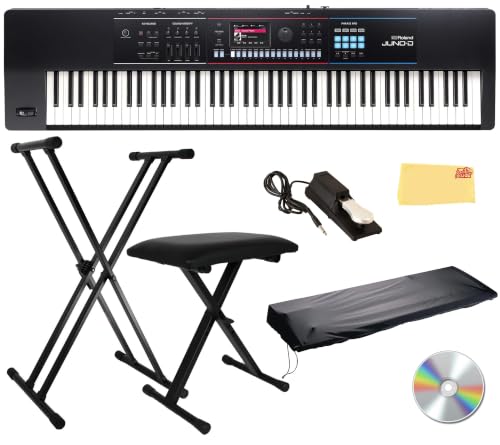
- 3,800+ sounds with Roland ZEN-Core
- 88 weighted keys for full-size playing
- Includes stand, bench, pedal, and cover
Best For: Church keyboardists performing with live worship bands
Best DIY Learning Resource

- Teaches analog monosynth construction
- 160 pages of focused instruction
- Compact, lightweight reference book
Best For: Musicians studying synthesis before buying hardware
Best Arranger Workstation

- 61-key professional arranger keyboard
- Color TouchView display
- Includes stand, bench, pedal, and headphones
Best For: Players wanting a bundled 61-key arranger setup
Best Synthesis Reference
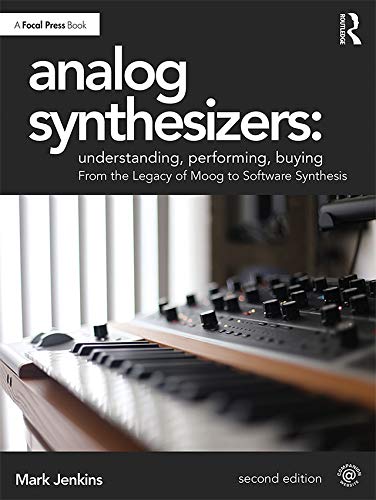
- Covers analog, digital, and software synthesis
- Includes buying and repair guidance
- 447-page second edition with sound examples
Best For: Musicians researching synthesis and equipment choices
Practical Foundation
The Fundamentals of Synthesizer Programming

- Covers hardware and software synth controls
- Includes diagrams and practical patch examples
- A compact introductory guide for study or practice
Best For: Beginners learning synth programming for studio or live use
Complete Sound Design Guide

- Covers seven major synthesis approaches
- Balances theory with practical examples
- A detailed 349-page reference for sound creation
Best For: Producers and composers developing broad synthesis skills
Quick Preset Editing

- Focuses on preset and performance editing
- Uses musical examples and solos
- A concise 48-page guide
Best For: Keyboardists seeking fast, practical editing guidance
Best Beginner Synth Guide
Synthesizer for Absolute Beginners

- Plain-English lessons on core synth controls
- Patch recipes for pads, leads, bass, and layers
- Includes daily workouts and printable cheat sheets
Best For: First-time synth players learning sound design
Best All-Around Synth Reference
How Synthesizers Work: A Simple Guide
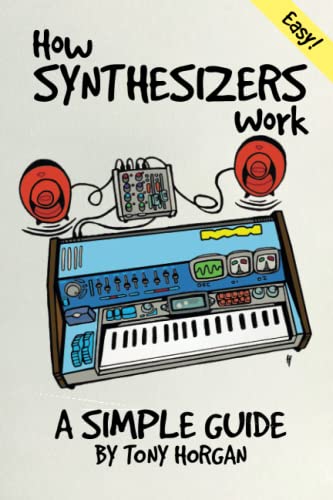
- Uses pictures and simple technical explanations
- Covers synthesis, MIDI, cables, and sequencing
- Suitable for many synth brands and formats
Best For: Beginners seeking broad synth fundamentals
Best Performance-Focused Classic

- Step-by-step preset and performance instruction
- Over 100 examples, diagrams, and exercises
- Compact guide for developing keyboard players
Best For: Players practicing musical synth performance and editing
Best Live Performance Pick – Roland JUNO-D8 Bundle
For church musicians seeking synthesizers for church musicians, the Roland JUNO-D8 is a practical stage-oriented option with 88 weighted keys, a large sound library, and controls designed for quick adjustments during worship sets. This bundle also adds several useful setup accessories.
Best For: Church keyboardists who need piano, organ, and synth sounds for live band performances.
Pros:
- Includes more than 3,800 ready-to-play sounds through the ZEN-Core engine.
- 88 weighted keys suit players who prefer a full-size keyboard feel.
- Knobs, sliders, and pitch bend/mod controls support hands-on sound shaping.
- Bundle includes a stand, bench, sustain pedal, cover, and instructional resources.
Cons:
- At 32 pounds, it is less convenient to transport than a smaller keyboard.
- The included sound expansion potential depends on Roland Cloud compatibility and setup.
The JUNO-D8 is the strongest fit here for a working worship setup because it combines live-ready sounds, full-size keys, USB-C connectivity, and a useful accessory package.
Best DIY Learning Resource – Synthesizers for Musicians
Although it is not a keyboard instrument, Synthesizers for Musicians can support church musicians who want to understand how synthesizers work before choosing or programming hardware. The book focuses on building an analog monosynth and provides a technical foundation for sound creation.
Best For: Curious musicians, hobbyists, and technically minded players learning analog synthesis fundamentals.
Pros:
- Explains how to make an analog mono-synthesizer.
- Provides 160 pages of focused instructional material.
- Offers a low-weight, compact format that is easy to keep near a practice setup.
Cons:
- It is a book rather than a playable synthesizer.
- Published in 1991, so it may not address current digital instruments or software workflows.
This is best treated as a supplemental learning purchase rather than a direct solution for church performance. It may help readers build vocabulary for evaluating synthesizers and shaping sounds.
Best Arranger Workstation – Korg PA600 Bundle
The Korg PA600 is an arranger keyboard for church musicians who want a 61-key instrument with a color TouchView display and a portable design. Its bundle includes practical accessories for getting a keyboard setup ready with fewer additional purchases.
Best For: Professional-level players who want a 61-key arranger keyboard for church music and accompaniment.
Pros:
- 61-key layout offers a balance between playing range and portability.
- Color TouchView display provides an on-instrument visual interface.
- Bundle includes an adjustable stand, bench, dust cover, sustain pedal, headphones, and polishing cloth.
Cons:
- The supplied notes do not specify the PA600’s sound count, recording features, or detailed arranging capabilities.
- Its listed bundle weight of 88.4 pounds makes the complete package substantial to move.
The PA600 is worth considering when an arranger format and accessory-rich bundle matter more than a full 88-key layout. Verify the specific accompaniment and connectivity features you need before purchasing.
Best Synthesis Reference – Analog Synthesizers
Analog Synthesizers: Understanding, Performing, Buying is a reference for church musicians who want deeper context on analog, digital, and software synthesis. It covers sound physics, instrument layout, purchasing, and repair, making it useful when researching synthesizers for church musicians.
Best For: Players and worship-tech teams comparing synthesis approaches or developing sound-design knowledge.
Pros:
- Covers the history and development of analog, digital, and software synthesis.
- Includes guidance on sound creation, purchasing, and instrument repair.
- The second edition has 447 pages and a companion website with sound examples.
Cons:
- It is an educational book, not a playable synthesizer.
- Its broad historical and technical scope may be more than a beginner needs for immediate worship use.
This book can help a church musician make more informed equipment decisions and understand synthesis terminology. It works best alongside hands-on practice with a keyboard or software instrument.
Practical Foundation – The Fundamentals of Synthesizer Programming
For church musicians looking to understand what is happening behind a synth patch, The Fundamentals of Synthesizer Programming offers a focused starting point. It explains the components and controls found in hardware and software synthesizers, with practical examples using Reason Studios Subtractor and a Moog Voyager.
Best For: Beginners who want a structured introduction to synth programming for studio work or live performance.
Pros:
- Explains core synthesizer components and controls clearly.
- Uses block diagrams and practical examples to reinforce concepts.
- Covers both hardware and software synthesizers.
- Designed for introductory electronic music study.
Cons:
- Its introductory scope may not satisfy experienced sound designers.
- Examples focus on Reason Studios Subtractor and Moog Voyager.
At 113 pages, this is a relatively compact way to build foundational knowledge before creating or adapting sounds for worship arrangements. Its textbook-style approach is especially useful if you prefer organized instruction over a broad reference manual.
Complete Sound Design Guide – Creating Sounds from Scratch
Creating Sounds from Scratch: A Practical Guide to Music Synthesis for Producers and Composers
Check Price On AmazonFor church musicians who want to move beyond presets, Creating Sounds from Scratch is a substantial guide to designing and shaping electronic sounds. It combines sound and hearing fundamentals with practical examples across major synthesis methods, making it useful for building a deeper sound-design vocabulary.
Best For: Producers, composers, and keyboardists who want broad coverage of synthesis techniques and contemporary sound-design approaches.
Pros:
- Covers subtractive, FM, additive, physical modeling, wavetable, sample-based, and granular synthesis.
- Connects theory with practical training examples.
- Includes historical context and concepts related to sound and hearing.
- Useful for sound creation, composition, editing, and commercial production.
Cons:
- Its 349-page length may be more than a beginner needs for quick results.
- The broad technical coverage may require sustained study.
This is the strongest choice of the three for musicians who want to create distinctive pads, leads, textures, and other sounds rather than simply edit existing patches. Its breadth makes it a long-term reference for studio production and composition.
Quick Preset Editing – Programming Synthesizers
Programming Synthesizers (The Keyboard magazine library for electronic musicians)
Check Price On AmazonChurch musicians who need a concise guide to shaping existing sounds may appreciate Programming Synthesizers. This Keyboard magazine library title focuses on editing presets, editing in performance, and applying the ideas through musical examples and solos.
Best For: Keyboardists who want a short, practical introduction to preset editing and performance-oriented synthesizer control.
Pros:
- Focuses directly on editing presets.
- Includes guidance on editing in performance.
- Uses musical examples and solos to connect programming with playing.
- Its 48-page length is easy to work through quickly.
Cons:
- Provides less depth than a full synthesis textbook.
- Does not offer the broad technique coverage found in newer, longer guides.
- Enhanced typesetting and page-flip features are not enabled.
This compact guide makes sense when your priority is improving sounds during rehearsals, services, or performances rather than mastering synthesis theory. It is a focused supplement for players who already have access to a synthesizer and want actionable editing guidance.
Best Beginner Synth Guide – Synthesizer for Absolute Beginners
For church musicians looking for an approachable entry point, Synthesizer for Absolute Beginners is a practical guide to understanding synth controls and creating useful sounds. Its short daily lessons cover pads, leads, basslines, chords, melodies, recording, and basic computer connections without requiring music reading.
Best For: First-time synth players who want a gentle, hands-on introduction to sound design and simple musical practice.
Pros:
- Explains oscillators, filters, envelopes, and LFOs in plain English.
- Includes recipes for pads, leads, synth bass, and layered sounds.
- Offers a seven-day challenge, cheat sheets, patch sheets, and progress tracking.
Cons:
- Its beginner focus may feel limited for experienced players.
- The book is newly published, so long-term reader feedback may be limited.
This is a strong choice when you want structured practice rather than a reference-only manual. The daily format and focus on pads and layered sounds may be especially useful for musicians building confidence before serving with a synthesizer in church.
Best All-Around Synth Reference – How Synthesizers Work: A Simple Guide
How Synthesizers Work: A Simple Guide is a broad introductory option for church musicians who want to understand their instrument across brands and formats. It combines pictures, simple explanations, practical sounds to try, and coverage of synthesis, effects, MIDI, cables, sequencing, and arpeggiation.
Best For: Beginners who want one accessible overview of synth terminology, signal flow, connections, and sound creation.
Pros:
- Covers oscillators, filters, LFOs, envelopes, effects, and sound waves.
- Includes MIDI, timing synchronization, audio cables, CV and Gate, and modular signals.
- Designed for many brands, including Roland, Korg, Moog, Yamaha, Novation, Arturia, and Eurorack.
Cons:
- Its wide scope may provide less focused practice than a dedicated workbook.
- The supplied description does not specifically address church performance or worship setups.
Choose this guide if you need a general-purpose foundation before deciding how deeply to explore synthesis. Its sections on connections and MIDI can help new players make sense of a broader church music rig, while the sound experiments encourage hands-on learning.
Best Performance-Focused Classic – Beginning Synthesizer
Beginning Synthesizer takes a performance-oriented approach that can suit church musicians who already have access to a keyboard and want to become more musical with it. The book provides step-by-step instruction on presets, performance controls, preset editing, and editing in performance, supported by examples, diagrams, and exercises.
Best For: New or developing keyboard players who want to move beyond presets and practice practical synth performance and editing.
Pros:
- Focuses on using presets and performance controls in musical contexts.
- Includes more than 100 musical examples, diagrams, and programming exercises.
- Concise 96-page format makes it a manageable starting resource.
Cons:
- Published in 1986, so newer synth features and workflows may not be covered.
- The supplied notes do not mention MIDI, software synths, or modern recording setups.
- Its Kindle listing lacks enhanced typesetting and page flip.
This classic is worth considering when performance technique and preset editing matter more than current production technology. It may work best alongside a newer manual if your church setup includes modern digital, software, or workstation features.
How We Picked These Synthesizers for Church Musicians
We selected products based on their usefulness in real church-music settings, including worship services, rehearsals, songwriting, sound design, and independent practice. The list includes complete keyboard bundles, arranger-style instruments, and books that help beginners and intermediate players understand synthesis and programming.
Our priorities were practical versatility, sound-shaping potential, keyboard usability, learning support, and value. Because churches have different worship styles and budgets, there is no single best choice for every musician. A layered pad specialist may need different features than a player covering piano, organ, strings, and backing parts from one keyboard.
Quick Comparison
| Best For | Look For | Most Useful Features |
|---|---|---|
| Modern worship textures | Performance synthesizer | Layers, splits, effects, presets, and hands-on controls |
| Solo services or small teams | Arranger keyboard | Accompaniment styles, rhythms, onboard sounds, and display controls |
| Beginners | Introductory learning guide | Clear terminology, structured lessons, and practical exercises |
| Sound designers | Synthesis reference | Detailed coverage of oscillators, filters, envelopes, modulation, and programming |
Key Buying Factors for Synthesizers for Church Musicians
Sound Selection and Layering
Prioritize usable worship sounds such as pads, electric pianos, organs, strings, basses, leads, and atmospheric textures. Splits and layers are especially valuable when one player must cover multiple musical roles.
Keyboard Feel and Range
Consider whether you need a lightweight synth action for fast parts or a more piano-like response for worship piano and dynamic accompaniment. A 61-key layout is portable and flexible, while a larger range can reduce octave-shifting during performance.
Live Control and Reliability
Look for straightforward patch changes, assignable controls, sustain-pedal support, stable construction, and clear visibility from the player’s position. Fast navigation matters when sounds must change between songs.
Arranger Features and Connectivity
Arranger functions can help solo musicians build a fuller sound, while USB, MIDI, audio outputs, and pedal connections make it easier to integrate the keyboard with a worship rig or recording setup. Confirm that the outputs match your mixer, interface, or powered speaker.
Learning Curve and Support
New players should favor clear controls and guided instruction rather than buying the most complex workstation available. Books on synthesis can also make an advanced instrument more useful by explaining how to create and modify sounds instead of relying only on presets.
Who Should Buy Which Synthesizers for Church Musicians?
Choose a performance synthesizer if your worship set depends on pads, layered textures, leads, and flexible live sound changes. These are a strong fit for experienced keyboardists and contemporary worship teams.
Choose an arranger keyboard if you regularly play alone, support a small congregation, or need accompaniment patterns and broad instrumental coverage from one instrument.
Choose a beginner guide if you are learning synthesis, programming, or keyboard basics and want a lower-cost way to build confidence before investing in hardware.
Choose an advanced synthesis reference if you already own a keyboard and want to design original patches, understand signal flow, or create sounds for worship, composing, and production. Before buying, confirm the instrument’s size, included accessories, warranty, and return policy so it fits your church’s space and workflow.