
Finding the right MIDI interface under $300 means balancing connectivity, routing flexibility, compatibility, and ease of use. The best choice depends on whether you need simple USB control, multi-device MIDI distribution, audio integration, or wireless performance.
This roundup covers compact interfaces and dedicated MIDI tools for home studios, live rigs, hardware synth setups, and computer-based production. Use the buying guide below to narrow the options by workflow and essential features.
Best 10 Midi Interfaces Under 300 Picks for 2026
Best All-Around Starter
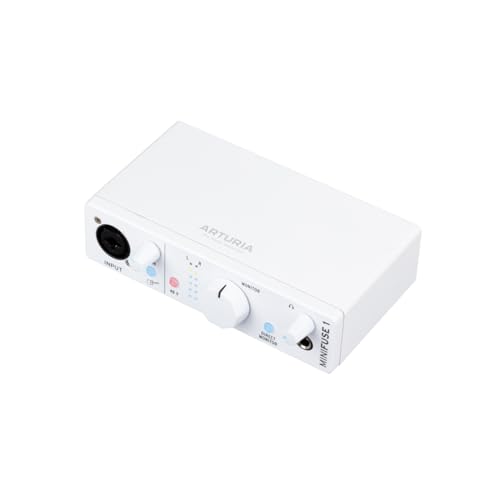
- Five-pin MIDI input and output
- 192 kHz audio and loopback
- Five-year warranty and software bundle
Best For: Beginners needing compact audio and MIDI recording
Best MIDI Splitter

- One MIDI input and four outputs
- Supports all 16 MIDI channels
- Two-year warranty
Best For: Routing one keyboard or MIDI source to four devices
Best for Guitar and Vocals
Focusrite Scarlett Solo 3rd Gen

- XLR mic preamp and Hi-Z input
- 24-bit/192 kHz recording
- Air mode and bundled software
Best For: Solo guitar, vocal, and podcast recording
Best Five-Output Thru Box

- One input and five MIDI outputs
- Supports MPE, SysEx, clock, and timecode
- USB-C powered with compact housing
Best For: Hardware-heavy studio, stage, and pedalboard rigs
Studio-Ready USB Pick
Focusrite Scarlett Solo 4th Gen

- 120dB dynamic range with 24-bit/192kHz support
- Air modes for vocals and guitars
- Includes a broad recording software bundle
Best For: Songwriters recording one mic and one instrument
Advanced Routing Pick

- Standalone 3-in/3-out MIDI routing
- Supports MPE, SysEx, clock, and MIDI timecode
- Works across major desktop and mobile operating systems
Best For: Multi-device MIDI rigs and complex hardware routing
Budget Recording Pick
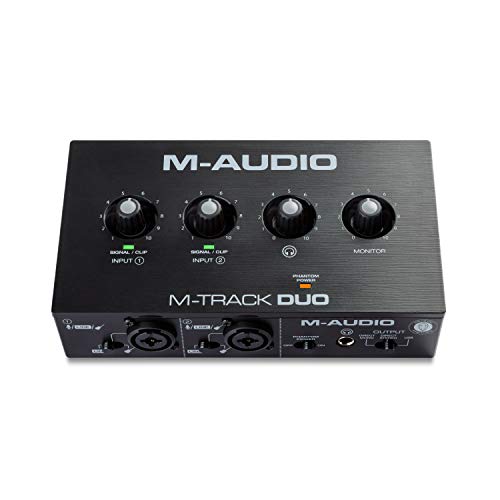
- Two combo mic, line, and instrument inputs
- USB/Direct switch for zero-latency monitoring
- Includes MPC Beats production software
Best For: Beginner recording, podcasting, and live streaming
Best Pedalboard Pick

- 2-in/2-out 5-pin MIDI I/O
- Standalone USB or 9V power
- Routing, filtering, mapping, and SysEx support
Best For: Guitarists and compact pedalboard setups
Best Wireless Option

- Wireless MIDI transmission
- Up to 48 hours of battery use
- Supports iOS, macOS, Windows 10, and Android
Best For: Cable-free performance and mobile MIDI setups
Best Simple Pick

- USB host for up to eight MIDI device ports
- Multiple MIDI routing and virtual port options
- Four onboard configuration presets
Best For: Complex studio and live MIDI systems
Best All-Around Starter – Arturia MiniFuse 1
If you want one of the more versatile midi interfaces under 300 for a compact home setup, the Arturia MiniFuse 1 combines audio recording with standard five-pin MIDI input and output. It supports microphones, instruments, synths, controllers, and drum machines while adding useful software and a beginner-friendly workflow.
Best For: Beginners and mobile home-studio users who need audio recording plus MIDI connectivity in a compact interface.
Pros:
- Includes five-pin MIDI input and output for synths, controllers, and drum machines.
- Provides a combo mic/instrument/line input with 48V phantom power and balanced outputs.
- Offers 192 kHz recording, loopback, a USB hub, and extensive included software.
- Backed by a five-year warranty and reliability testing.
Cons:
- Its single-channel design may be limiting for larger simultaneous recording setups.
- The compact feature set is oriented toward smaller studios rather than extensive I/O needs.
The MiniFuse 1 is a strong choice when MIDI is important but you also need a practical audio interface for vocals, guitar, or synths. Its included software and long warranty add value for first-time producers.
Best MIDI Splitter – MIDI Solutions Quadra Thru
The MIDI Solutions MultiVoltage Quadra Thru is a straightforward option among midi interfaces under 300 when your main goal is distributing one MIDI signal to several devices. Its one-input, four-output design is built for keyboard and MIDI-capable setups rather than audio recording.
Best For: Keyboard players and studio users who need to send one MIDI source to four destinations.
Pros:
- Splits one MIDI input across four MIDI outputs.
- Supports all 16 MIDI channels.
- Works across Windows, macOS, iOS, Android, and Linux environments.
- Includes a two-year warranty.
Cons:
- It is a MIDI through box, not an audio interface for recording microphones or instruments.
- It provides fewer outputs than a five-output MIDI thru unit.
Choose the Quadra Thru when reliable MIDI signal distribution matters more than audio I/O. It is a focused, simple solution for expanding a keyboard or controller connection to four MIDI devices.
Best for Guitar and Vocals – Focusrite Scarlett Solo 3rd Gen
The Focusrite Scarlett Solo 3rd Gen is a practical pick among midi interfaces under 300 for recording guitar, bass, vocals, and podcasts. It focuses on high-quality USB audio with a mic preamp, Hi-Z instrument input, Air mode, and bundled production software.
Best For: Guitarists, vocalists, and creators who prioritize clean USB audio recording in a compact interface.
Pros:
- Includes a dedicated XLR mic preamp and Hi-Z instrument input.
- Records at up to 24-bit/192 kHz with high-performance converters.
- Air mode and Gain Halos support clearer takes and easier level monitoring.
- Comes with recording software, effects, instruments, and mastering tools.
Cons:
- The supplied notes do not list standard five-pin MIDI input or output.
- Its two-input layout is aimed at small recording sessions rather than larger ensembles.
The Scarlett Solo is best viewed as an audio-first interface for solo recording. If your setup centers on guitar, bass, vocals, or podcasts and does not require onboard five-pin MIDI, its recording features and software bundle are appealing.
Best Five-Output Thru Box – CME MIDI Thru5 WC
CME MIDI Thru5 WC 1-in-5-out MIDI Thru | 5-pin DIN, High-speed, Optional Bluetooth
Check Price On AmazonFor setups needing more MIDI destinations, the CME MIDI Thru5 WC is a focused choice among midi interfaces under 300. It routes one standard five-pin MIDI input to five outputs, with USB-C power and support for notes, controllers, clock, SysEx, timecode, and MPE.
Best For: Studio, stage, and pedalboard setups that need to distribute MIDI to five hardware devices.
Pros:
- Provides one MIDI input and five outputs through standard five-pin connectors.
- Supports all MIDI channels and a broad range of MIDI messages, including MPE.
- Uses high-speed optocouplers for low-latency, error-resistant transmission.
- Compact housing and USB-C power suit crowded or portable setups.
Cons:
- The USB port supplies power only; it does not provide USB MIDI connectivity.
- It is a MIDI distribution device, not an audio recording interface.
- Optional Bluetooth is noted, but the supplied details do not describe its implementation.
The MIDI Thru5 WC makes sense when a single hardware MIDI source must control five destinations with minimal cabling complexity. Its dedicated design is useful for hardware-heavy rigs, but it will not replace an audio interface or USB MIDI host.
Studio-Ready USB Pick – Focusrite Scarlett Solo 4th Gen
For musicians comparing midi interfaces under 300, the Focusrite Scarlett Solo 4th Gen is primarily a compact USB audio interface for recording vocals and guitar. It combines a 1 XLR mic preamp, a Hi-Z instrument input, 24-bit/192kHz recording, and a 120dB dynamic range in a small desktop unit.
Best For: Songwriters and home recordists who need straightforward mic-and-instrument recording with Mac, Windows, or iPad compatibility.
Pros:
- 120dB dynamic range and up to 192kHz sample rate support detailed recordings.
- Air modes add presence and harmonic drive to vocals and guitars.
- Includes Ableton Live Lite, Pro Tools Intro+, Cubase LE, and Hitmaker Expansion.
- Compact 14.4-ounce design with USB-C connectivity.
Cons:
- Provides one XLR mic input and one Hi-Z instrument input, so it is not suited to larger multi-mic sessions.
- It is an audio interface rather than a dedicated MIDI interface.
The Scarlett Solo 4th Gen is a strong choice when your priority is high-resolution vocal or guitar recording and a useful software bundle. MIDI-focused setups will need a separate MIDI interface.
Advanced Routing Pick – CME U6MIDI Pro 3-in-3-out
Among midi interfaces under 300, the CME U6MIDI Pro stands out as a dedicated 3-in/3-out MIDI solution with routing, filtering, merging, splitting, and mapping tools. Its USB-C connection works with major computer and mobile operating systems, while standalone operation supports hardware-based setups.
Best For: Keyboardists, electronic musicians, and studio users managing several MIDI devices, complex routing, or time-sensitive synchronization.
Pros:
- Standalone 3-in/3-out MIDI operation with router and filter functions.
- Supports MIDI notes, controllers, clock, SysEx, MIDI timecode, and MPE.
- Compatible with macOS, iOS, Windows, Android, Linux, and Chrome OS.
- Offers close-to-zero latency, no jitter, and high-precision wired transmission.
Cons:
- Handles MIDI only and does not provide audio inputs or outputs.
- Advanced routing configuration requires the UxMIDI Tools software.
- Warranty coverage is listed as one year.
The U6MIDI Pro is the most directly relevant option here for a MIDI-centered setup. Its three inputs and three outputs, standalone routing, and broad protocol support make it more capable than a basic computer-only MIDI connection.
Budget Recording Pick – M-AUDIO M-Track Duo
For shoppers browsing midi interfaces under 300 who also need audio recording, the M-AUDIO M-Track Duo is a compact two-channel USB audio interface. It offers dual combo XLR/line/instrument inputs, phantom power, direct monitoring, and 48kHz audio for recording, podcasting, and live streaming.
Best For: Beginners, podcasters, and home musicians who want two flexible inputs and simple zero-latency monitoring from a Mac or PC.
Pros:
- Two combo inputs accommodate microphones, line sources, and instruments.
- Phantom power supports compatible condenser microphones.
- USB/Direct monitoring switch helps provide zero-latency monitoring.
- Includes MPC Beats and supports Mac, Windows, iOS, and Android.
Cons:
- Maximum sample rate is 48kHz, below the Scarlett Solo’s 192kHz specification.
- It is an audio interface and does not provide dedicated MIDI I/O.
- Warranty coverage is listed as one year.
The M-Track Duo is a practical entry-level audio interface when two simultaneous sources matter more than high sample-rate recording. Choose it for flexible input options and monitoring rather than for a dedicated MIDI workflow.
Best Pedalboard Pick – CME U4MIDI WC
For musicians comparing MIDI interfaces under 300, the CME U4MIDI WC is a compact 2-in/2-out option focused on reliable control for keyboards, pedals, synths, and other standard 5-pin MIDI gear. It supports major desktop and mobile operating systems and can run from USB or optional 9V DC power.
Best For: Guitarists, pedalboard users, and musicians who need flexible MIDI routing in a small standalone interface.
Pros:
- 2-in/2-out 5-pin MIDI connectivity with claimed zero-latency, jitter-free transmission.
- Works with macOS, Windows, iOS, Android, Linux, and Chrome OS.
- Supports MIDI thru, split, merge, mapping, filtering, and unlimited SysEx transmission.
- Compact, lightweight enclosure with USB-C and optional 9V DC power.
Cons:
- Optional WIDI Bluetooth MIDI requires the separately available WIDI Core module.
- Limited to 2-in/2-out physical MIDI I/O.
The U4MIDI WC stands out when portability, pedalboard compatibility, and advanced routing matter more than a large port count. Its standalone power options also make it practical for live setups without a continuously connected computer.
Best Wireless Option – M-VAVE Wireless MIDI System
Among MIDI interfaces under 300, the M-VAVE Wireless MIDI Transmission System is designed for performers and arrangers who want to replace a MIDI cable with a compact wireless connection. It pairs with compatible MIDI instruments, computers, and mobile devices while offering rechargeable operation.
Best For: Performers who want wireless MIDI mobility and a rechargeable adapter system for compatible instruments and devices.
Pros:
- Wireless MIDI connection for reducing cable clutter on stage or in mobile setups.
- Advertised ultra-low latency and a stable connection after pairing.
- Built-in rechargeable battery provides up to 48 hours of continuous use for MIDI A after a full charge.
- Supports pairing with iOS, macOS, Windows 10 through the Korg BLE MIDI Driver, and Android MIDI apps.
Cons:
- Windows 10 use requires the Korg BLE MIDI Driver, according to the supplied details.
- Compatibility depends on Bluetooth MIDI support and the correct pairing method.
- The listing specifies one MIDI channel rather than a multi-port interface.
The M-VAVE system is a specialized wireless alternative rather than a conventional multi-port MIDI interface. It makes the most sense when freedom from cables is the priority and your instruments and software meet its stated Bluetooth requirements.
Best Simple Pick – CME H4MIDI WC
For buyers seeking MIDI interfaces under 300 with expanded routing, the CME H4MIDI WC adds USB host functionality to conventional MIDI connectivity. It can connect class-compliant USB MIDI devices directly to MIDI hardware, operate without a computer, and store four preset configurations.
Best For: Producers and advanced live rigs that need USB host connections, multiple virtual MIDI ports, and configurable routing.
Pros:
- Standalone USB host supports up to eight USB MIDI device ports through a standard hub.
- Provides up to 2-in/2-out physical MIDI, 8-in/8-out USB host, and 4-in/4-out USB-C client ports.
- Includes thru, split, merge, mapper, and filter functions through HxMIDI Tools.
- Offers USB or optional 9V DC power, four onboard presets, and compatibility with major operating systems.
Cons:
- Optional WIDI Bluetooth MIDI requires the separately available WIDI Core module.
- Its advanced USB host and routing features may be more than basic MIDI users need.
- USB host expansion requires a compatible class-compliant MIDI device and hub.
The H4MIDI WC is the most flexible choice in this group for complex hardware-centered systems. Its USB host mode and preset management can reduce the need for a computer while keeping detailed routing available for studio or stage use.
How We Picked the Best Midi Interfaces Under 300
We focused on interfaces that offer practical value for musicians, producers, and live performers working with computers, controllers, synthesizers, and other MIDI hardware. The selection includes USB MIDI interfaces, MIDI thru boxes, audio interfaces with MIDI support, USB host solutions, and wireless transmission systems.
Key considerations included the number and type of inputs and outputs, support for 5-pin DIN and USB connections, routing flexibility, operating-system compatibility, portability, latency considerations, and setup simplicity. Because these products serve different purposes, the best option is not necessarily the one with the most connections; it is the one that matches your equipment and workflow.
Quick Comparison
- For basic computer recording: Focusrite Scarlett Solo models, Arturia MiniFuse 1, and M-AUDIO M-Track Duo combine audio functionality with compact USB connectivity.
- For distributing one MIDI signal: MIDI Solutions Quadra Thru and CME MIDI Thru5 provide dedicated multi-output MIDI routing.
- For broader MIDI routing: CME U6MIDI Pro and CME U4MIDI WC offer multiple MIDI inputs and outputs in compact formats.
- For USB host applications: CME H4MIDI WC is designed for connecting MIDI devices that need host-style USB functionality.
- For cable-free setups: M-VAVE’s wireless system is suited to compatible controllers, computers, and mobile devices where low-latency wireless control is useful.
Key Buying Factors for Midi Interfaces Under 300
Connection Types and Port Count
Check whether your setup uses 5-pin DIN, USB, Bluetooth, or a combination of connection types. Count current devices and leave room for expansion. A two-in/two-out interface may be enough for one controller and one synthesizer, while a thru box is better for sending the same signal to several devices.
Routing and MIDI Thru Requirements
A MIDI thru box duplicates an incoming signal across multiple outputs, making it useful for synchronized hardware rigs. Multi-port interfaces offer more flexible two-way communication, but they can require more configuration and careful cable planning.
Audio and MIDI in One Device
If you also record microphones or instruments, an audio interface with MIDI support can reduce equipment and cable clutter. Dedicated MIDI hardware is usually more appropriate when your main priority is routing several external synthesizers or controllers.
Compatibility and Latency
Confirm support for your operating system, mobile device, and required software before buying. Wireless MIDI can simplify a setup, but wired connections are generally the safer choice for mission-critical live performance or timing-sensitive hardware sequences.
Who Should Buy Which Midi Interfaces Under 300?
Choose a compact audio interface with MIDI if you are building a small home studio and want recording inputs alongside basic MIDI control. Choose a dedicated thru box if one controller or sequencer must feed several MIDI devices at once. Choose a multi-port CME interface if you use multiple synthesizers, drum machines, or controllers and need two-way routing.
Choose a USB host interface when you need to connect USB MIDI gear without relying on a computer. Choose a wireless system when portability and cable reduction matter more than maximum connection certainty. Before purchasing, map every device in your setup and verify the required ports, power method, and software compatibility.